

Select dimensions in cm, mm, inches, ml, or oz and more — whatever fits your product.

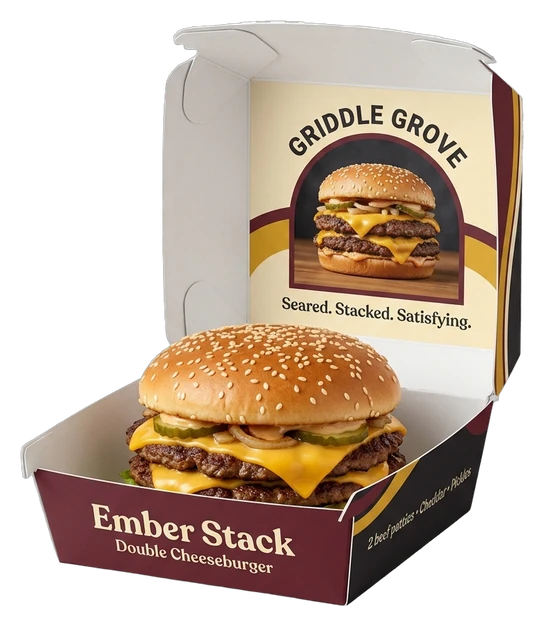
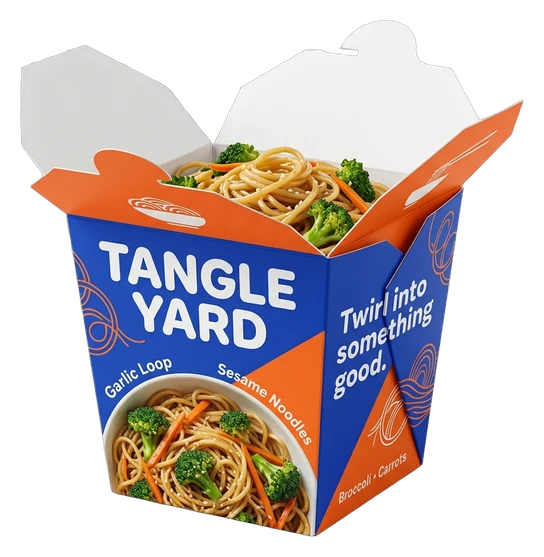
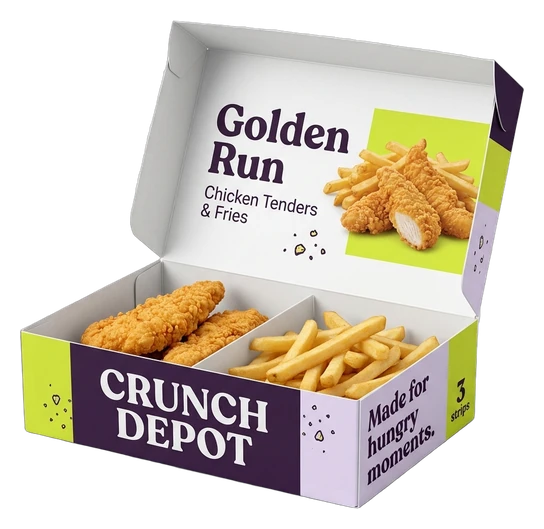
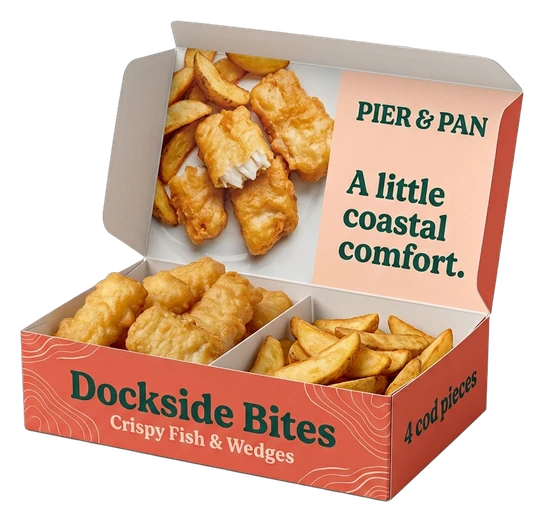
Custom grease resistance boxes are paper-based food packages designed around products that can release oils, fats, sauces, or moisture during serving, takeaway, storage, or delivery. Match the box structure, board, barrier treatment, dimensions, printing, and food-contact conditions to the actual application rather than relying on a generic grease-resistant material claim.

Select dimensions in cm, mm, inches, ml, or oz and more — whatever fits your product.

Choose the Stock, printing type, and enter your order quantity.

Upload your ready artwork — or just write “Need Design” and we'll handle it.

Fill in your name, contact number, and email for quick communication.

Solve a quick captcha and hit “Submit Quote” — it takes seconds!

Our expert will reach out ASAP with the best market rate from a top packaging provider.

After You Approve the Quote — Here's What Happens Next


Grease-resistant food packaging should be selected from the conditions inside the box, not from appearance alone. Fried foods, baked goods, buttery pastries, pizza, sandwiches, burgers, takeout meals, and other products can expose paperboard to different combinations of oil, moisture, heat, pressure, and holding time. Begin with the food and service method, then determine which structure, board, treatment, printing, and closure need to work together.
Start by explaining what creates the grease exposure. Oil can come directly from fried food, melted cheese, butter, sauces, meat, toppings, or ingredients released as the food rests. A bakery item with a small amount of butter creates a different requirement from freshly fried food placed into a closed takeout package. Also consider whether grease remains concentrated in one area. The bottom panel of a box may experience substantially more exposure than the lid or sidewalls. If the product is stacked, tilted, or transported, oil can move into additional areas. The packaging specification should reflect those real conditions rather than treating all greasy foods as one application.
The box still needs to perform its basic containment job. Measure the food's length, width, height, and packed weight, including liners, wraps, trays, dividers, sauce containers, or other components that will sit inside. Allow enough clearance for loading and closing without selecting an unnecessarily oversized package. Different food formats can require different structures. A shallow bakery carton, folding food box, takeout carton, tray-style package, or corrugated configuration can each respond differently to grease exposure and handling. Structure selection should consider how the package is assembled, filled, carried, stacked, opened, and disposed of—not only how it looks in a product photograph.
Confirm whether the food touches the box itself. In some applications, food may sit directly against the paperboard. In others, a separate deli sheet, wrapping paper, liner, tray, cup, bag, or primary package creates a barrier between the food and the box. This distinction matters because a presentation carton surrounding separately wrapped food has a different food-contact role from a carton receiving hot, oily food directly. Where direct food contact occurs, the complete material construction—including applicable paperboard, treatments, coatings, printing components, adhesives, and other substances—needs to be appropriate for the intended conditions of use. Do not describe every configuration as “FDA approved” simply because it is intended for food packaging.
If visible grease staining, oil penetration, softening, or loss of presentation is a concern, identify it during specification. The supplier can then review the applicable barrier construction rather than assuming that any coated-looking paperboard will perform the same way.
Grease is often only part of the problem. Hot food can release steam. Cold food can create condensation. Sauces, vegetables, toppings, frosting, and other ingredients can contribute moisture. A box may therefore need to cope with combined oil and moisture exposure rather than one isolated condition. Ventilation may also matter for certain foods because trapping steam can affect both the food and packaging environment. However, vent design should be matched to the application instead of automatically adding holes to every grease-resistant carton. Explain how the food behaves after packing so moisture considerations can be evaluated alongside grease resistance.
Paperboard provides the structure; the applicable barrier system addresses the intended exposure. Custom Boxes Inc. reports paperboard, cardstock, kraft, and corrugated routes across supported packaging work. The exact board grade, caliper, coating, treatment, and grease-resistant construction available for this product should still be confirmed before publication or production. A kraft appearance does not establish grease resistance. A white coated surface does not automatically establish food-contact suitability. Likewise, heavier board alone does not necessarily solve oil penetration. Material decisions should be based on the complete package requirement rather than one visible property.
Custom branding can be added only through printing routes compatible with the selected material and intended use. Custom Boxes Inc. reports digital, offset, and flexographic printing capabilities across supported packaging projects, including CMYK and selected spot-color routes. The applicable process for grease-resistant food boxes should be confirmed against board type, barrier treatment, quantity, print coverage, and food-contact conditions. Exterior printing may carry the logo, product identity, ordering information, graphics, or other brand communication. If printing is proposed on an interior food-contact surface, that configuration deserves additional review rather than being assumed acceptable from an exterior-print capability. Use the proof to approve artwork, layout, spelling, orientation, and general color arrangement. A digital proof does not demonstrate grease resistance or food-contact performance.
Food packaging can change visually after filling. A large logo positioned only on the bottom panel may disappear while the package is being carried. Important information near folds or closure areas may become difficult to read. Grease exposure may also be concentrated where certain graphics appear. Plan branding around the assembled box and customer viewing angles. Front, lid, side, and closure panels can each serve different communication roles. If the business requires product names, reheating guidance, allergen information, ingredients, nutrition information, warnings, or regulated statements, the responsible food business should provide approved content. Those requirements should not be invented during packaging design.
A restaurant counter order creates a different packaging journey from third-party delivery. For delivery applications, consider how the box will sit inside a paper bag, insulated carrier, larger carton, or other transport package. Product movement, stacking, steam, grease, and transit time can all affect the completed pack. Do not assume grease resistance equals leak resistance or transit protection. A greasy product may also contain free-flowing sauces or liquids that require a different containment strategy. If the box is expected to perform several jobs simultaneously, describe each requirement separately so the structure and material can be evaluated realistically.
Where performance matters, evaluate the box with the real food or a representative packed configuration under realistic conditions. Check dimensions, loading, closure, grease exposure, moisture, handling, stacking, and the intended holding period. A material sample viewed empty cannot demonstrate everything that happens after hot or oily food is packed inside. Application-specific testing can also reveal whether another component—such as deli paper, food wrapping paper, tray liner, insert, or separate container—is useful as part of the packaging system. Treat the result as evidence for the tested configuration rather than proof that every size and food application performs identically.
Pricing can depend on box dimensions, structure, board, barrier treatment, total quantity, artwork versions, print coverage, finishing, tooling, packing, and freight. Do not compare two quotes only by board thickness when their grease-resistant constructions or printing requirements differ. If several food items can use the same box, identify the most demanding realistic application before standardizing the specification. A shared format can simplify purchasing when all intended uses are appropriate for the chosen construction.Production timing should be confirmed after structure, material, artwork, payment, and required approvals are complete. Transit should remain separate when planning the required delivery date.
Send Custom Boxes Inc. your food type, dimensions, packed weight, approximate packing temperature, expected contact time, grease and moisture conditions, desired box dimensions, quantity, artwork, printing requirements, and delivery destination. Specify whether food will touch the box directly or use a separate liner or primary package. Complete the form, email Quotes@Customboxesinc.Com, or call +1 833-565-0363.


Answers to Help You Order with Confidence
They can be planned for suitable foods that expose packaging to oils or fats, including certain fried foods, sandwiches, bakery products, takeout meals, and other prepared foods. The appropriate construction depends on the food, temperature, grease level, moisture, contact time, and whether the box contacts the food directly.
Grease resistance should be specified and verified for the particular construction rather than treated as an unlimited guarantee. Performance can vary with the selected paperboard, barrier treatment, food type, temperature, oil level, and contact duration. Describe the actual application so the appropriate requirement can be evaluated.
Direct contact may be possible only where the complete box construction is suitable for the intended food-contact conditions. Paperboard, coatings or treatments, printing components, adhesives, temperature, and food type can all matter. Confirm the specific material documentation before making a direct-food-contact claim.
Custom printing may be possible on supported configurations. The applicable printing method and coverage should be matched to the selected board, barrier system, quantity, and food-contact arrangement. Interior printing that may contact food should receive separate application-specific review.
A blanket “FDA approved” claim should not be applied to every configuration. FDA regulates food-contact substances according to the specific substance and intended conditions of use. The exact paperboard, grease-resistant treatment, coatings, inks, adhesives, and other applicable components should be checked for the intended food application before publishing a compliance claim.
Custom Boxes Inc is a leading manufacturer and supplier of custom packaging boxes tailored for every product and industry. From startups to global brands, we empower businesses across the USA with cost-effective, high-quality, fully personalized packaging solutions — crafted with precision, delivered with speed. Whether you need eco-friendly cardboard boxes, rigid luxury boxes, or branded retail-ready display packaging — we've got you covered with endless customization options, low MOQs, and lightning-fast turnarounds.