

Select dimensions in cm, mm, inches, ml, or oz and more — whatever fits your product.

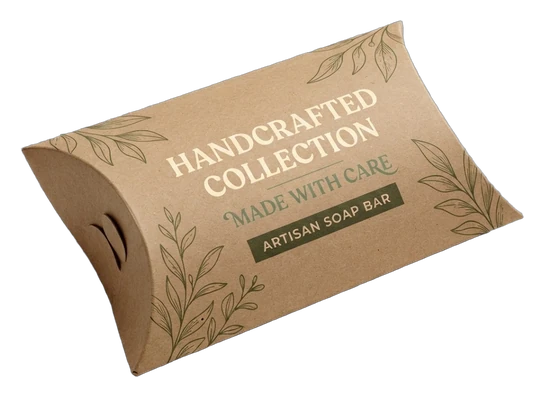


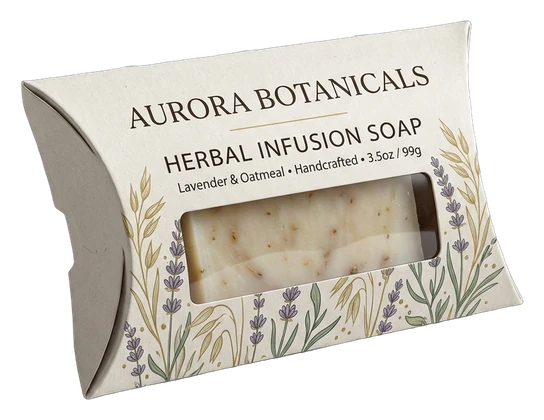
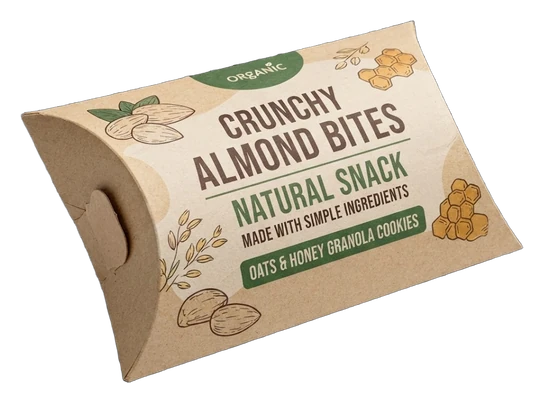
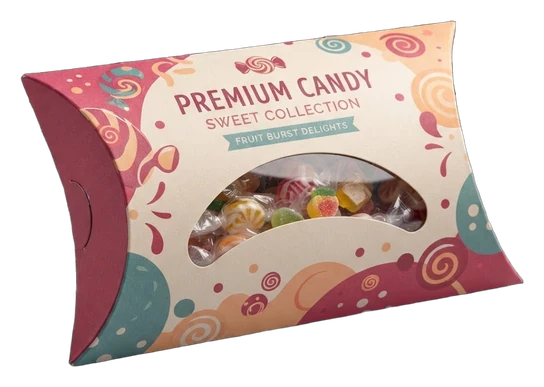
Custom pillow boxes are curved folding cartons used for jewelry, cosmetics, soaps, apparel accessories, favors, gift cards, candies, and other compact products. Retail brands, boutiques, event planners, subscription businesses, and promotional teams choose them when a conventional rectangular carton feels unnecessarily rigid or uses more display space than the item requires.Customize the finished dimensions, paperboard, closure, window, printing, and decorative details around the product’s shape, weight, protection needs, and retail setting. A well-planned pillow carton can combine quick assembly with a compact silhouette and broad curved branding panels. Share samples, measurements, quantity, artwork status, and delivery requirements with Custom Boxes Inc. to begin a tailored quotation.

Select dimensions in cm, mm, inches, ml, or oz and more — whatever fits your product.

Choose the Stock, printing type, and enter your order quantity.

Upload your ready artwork — or just write “Need Design” and we'll handle it.

Fill in your name, contact number, and email for quick communication.

Solve a quick captcha and hit “Submit Quote” — it takes seconds!

Our expert will reach out ASAP with the best market rate from a top packaging provider.

After You Approve the Quote — Here's What Happens Next


Pillow box packaging adds a rounded silhouette to products that need a little ceremony at purchase or handover. A typical folding pillow carton has a glued side seam and curved flaps at both ends. Opening the body and folding those flaps inward creates its familiar bowed shape.
That construction makes pillow boxes useful for boutique purchases, promotional gifts, and event favors. Your packaging brief starts with the item inside: its weight, firm edges, surface finish, and presentation requirements. Those details determine whether a simple carton works or an inner support is needed.
The outside length of a pillow box does not tell you how much product it can hold. Curved end flaps extend into the pack, while the bowed panels provide more depth at the center than near the edges. A rectangular item that matches the outside measurements may still prevent closure. Send your product dimensions with any pouch, backing card, or tissue included. We use that complete profile to recommend the usable internal space and loading clearance. For a firm or unusually shaped item, check a physical prototype with both ends closed. The contents should sit comfortably without pushing against the flaps or distorting the front panel.
Small accessories and soft goods often suit pillow gift boxes because they can occupy the curved space without requiring square corners. Jewelry can sit on a mounting card or inside a pouch; gift cards can use a support card; folded socks can create a compact boutique gift. Wrapped soap bars and individually wrapped treats may also fit, with the appropriate primary packaging retained. Tell us about contact or barrier requirements before choosing the stock. Heavy objects, sharp corners, and fragile pieces need closer assessment, since a decorative pillow carton alone does not provide cushioning or a moisture barrier.
The board needs enough stiffness to maintain the shape and enough flexibility to fold along the curved scores. Simply choosing the thickest stock can make a small pillow carton harder to form. We consider carton size, product weight, crease behavior, and the desired surface before recommending a paperboard specification. White paperboard supports bright graphics and fine printed detail. Custom kraft pillow boxes offer a brown paper appearance that works with restrained artwork, but the background changes how printed colors appear. If your logo relies on pale colors or white details, ask us to assess the print method and any white ink requirement.
Custom printed pillow boxes work best when the main message remains visible on the assembled curve. Place the logo, product name, and key design elements within the broad viewing area. Keep small text, barcodes, and essential information clear of the glue seam and curved fold lines. Choose full-color printing for illustrated collections or discuss spot colors for defined brand artwork. Selected foil, embossing, or spot gloss can highlight one focal detail. We review their placement against the dieline so decorative effects support the design without crowding the closure areas. Finish compatibility is confirmed for the chosen board and construction.
A window can reveal a product color, texture, or arrangement before purchase. Its position should match where the contents actually sit after filling. The opening also leaves less supporting board, so its size needs to work with the curve and the item's weight. An uncovered cutout exposes the product; a film-covered window introduces another material. Discuss the intended level of coverage when requesting window pillow boxes. Ribbon, a paper band, or a hang tab can add presentation or display value where the structure supports it. Allow for the extra assembly time, and check that added details leave your branding visible.
Standard folding pillow boxes arrive flat, helping conserve storage space before filling. Form the body, fold the first end closed, load the contents, and close the remaining flaps. The exact sequence should follow the approved construction, particularly when an insert or ribbon is involved. Overfilling can strain the folds and make the ends spring open. A suitable thumb notch may make reopening easier, while a paper seal can support a deliberate opening experience. Neither replaces a properly fitted closure. For larger packing runs, trial the complete process with the team who will fill the boxes before finalizing the design.
The curved body looks distinctive in a display tray or at a gift counter, but a standard pillow box does not provide the flat stacking surfaces of a rectangular carton. Plan its shelf position around the actual filled shape. Hanging versions require a suitable tab and an assessment of the filled weight. For parcel delivery, place the pillow carton inside an appropriate outer shipping box with the protection its contents need. The retail carton presents the product; the complete shipping pack must account for movement, compression, and handling along the delivery route.
Free design assistance helps turn your supplied branding into a layout for the selected pillow box dieline. Our team can help with artwork positioning, bleed, safe areas, and the relationship between printed panels and folds. You review the digital proof before production approval. A digital proof shows the proposed artwork layout; physical fit needs a separate check. Ask about prototype availability and any associated cost when the product is rigid, closely fitted, or supported by an insert. A filled sample lets you evaluate closure tension, presentation, and handling together.
For wholesale pillow box orders, pricing depends on dimensions, board, printing, finishes, and quantity per design. Supported paperboard orders may start at 50 boxes; the minimum for your configuration is confirmed in the quote. Share separate artwork versions early so we can assess the order accurately. Standard production normally takes 4–6 business days after payment, final artwork approval, and structure confirmation. Special features can change that schedule, and shipping transit is additional. Include your delivery ZIP code and required arrival date so production and shipping can be planned around your launch, restock, or event.
Share your product measurements, packed weight, quantity, and artwork with Custom Boxes Inc. We will help assess the shape, board, and print options, then prepare a tailored quote. Complete the quote form with your delivery details and any window, insert, or gift presentation requirements.



Answers to Help You Order with Confidence
Measure the product with its intended pouch, card, wrap, or insert included, then share those dimensions and the packed weight. The curved flaps reduce usable length, and internal depth varies across the bowed shape. We can help assess the fit; a physical prototype is useful when the contents are firm or closely fitted.
Free design assistance covers help arranging supplied artwork on the selected dieline, including bleed, safe areas, and fold placement. We can also discuss board, printing, and suitable decorative options for your project. Digital proof review is part of approval, while a physical prototype is a separate request with availability and cost confirmed.
Supported paperboard configurations may start at 50 boxes, with the exact minimum confirmed for your size, finish, and artwork versions. Unit pricing depends on the complete specification and quantity per design. Include your preferred order size in the quote form so we can assess a practical starting option.
Standard production normally takes 4–6 business days after payment, final artwork approval, and structure confirmation. Special features may require a different schedule, and transit time is additional. Share your delivery ZIP code and required arrival date so we can confirm the production and shipping plan for your order.
Custom Pillow Boxes for Gifts & Retail | Custom Boxes Inc.Standard paperboard pillow boxes need an appropriate outer shipping pack for parcel delivery. Their curved shape and overlapping flaps are intended for product presentation and do not replace a protective shipping carton. Choose the outer box and any inner protection around the filled pack, particularly for fragile or easily marked contents.
Custom Boxes Inc is a leading manufacturer and supplier of custom packaging boxes tailored for every product and industry. From startups to global brands, we empower businesses across the USA with cost-effective, high-quality, fully personalized packaging solutions — crafted with precision, delivered with speed. Whether you need eco-friendly cardboard boxes, rigid luxury boxes, or branded retail-ready display packaging — we've got you covered with endless customization options, low MOQs, and lightning-fast turnarounds.