

Enter length, width, and height in inches, millimeters, or centimeters. Tell us whether these measurements describe the finished burger or the usable space inside your current box.

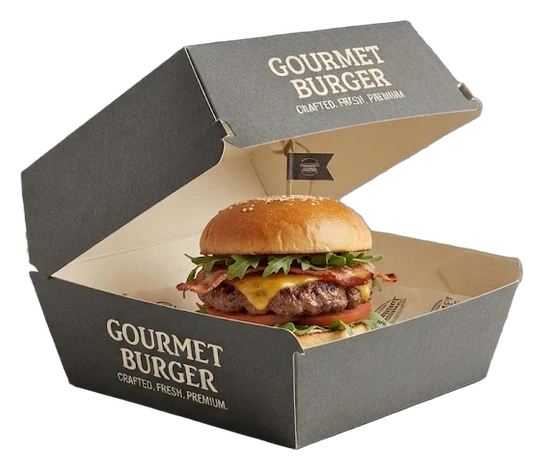
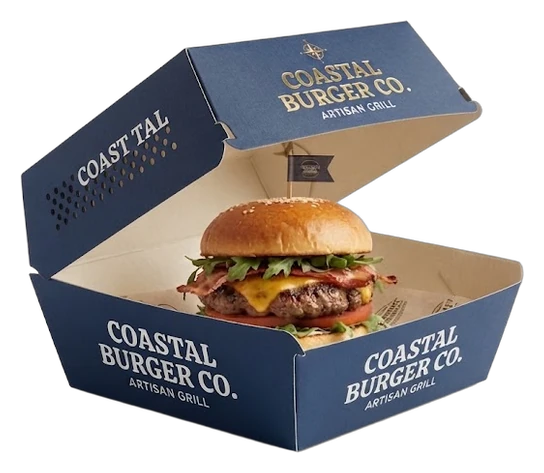
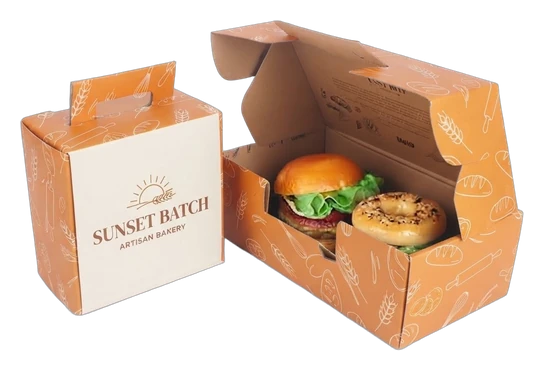
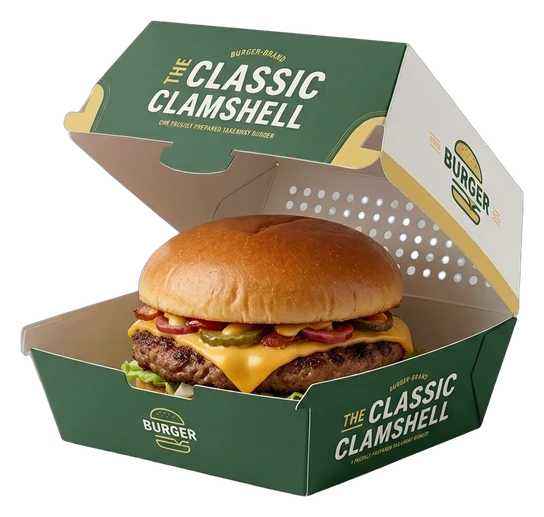
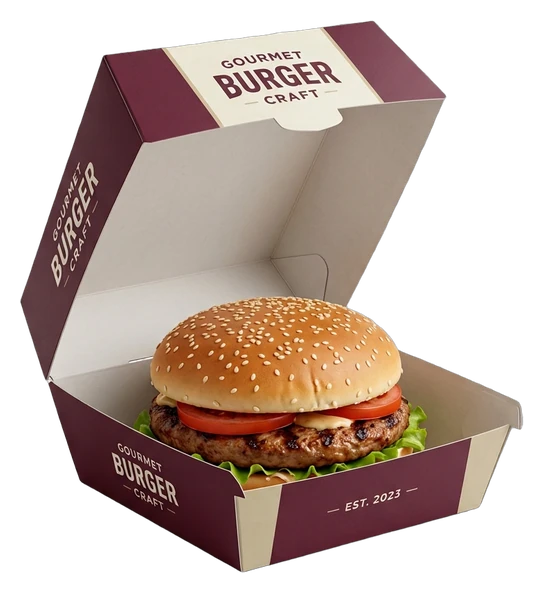
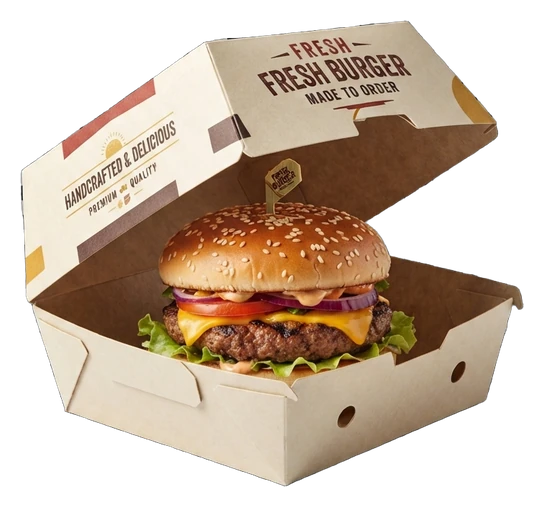
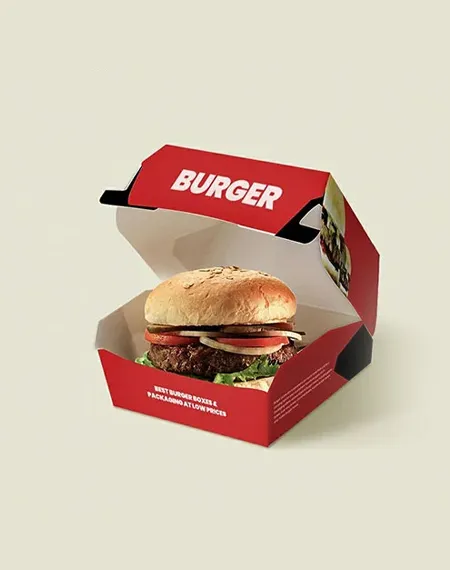
Custom Burger Boxes from Custom Boxes Inc. give restaurants, food trucks, and takeout kitchens packaging sized for the burger they serve. Match the carton to your bun width, stacked toppings, and packing routine, then add your logo to the exterior. Explore supported folding and hinged-lid formats, with stock and venting options reviewed for your use. Share your finished burger dimensions and order quantity to start your quote.

Enter length, width, and height in inches, millimeters, or centimeters. Tell us whether these measurements describe the finished burger or the usable space inside your current box.

Select your preferred stock and print options, or describe the result you need. Include grease exposure, wrapping, and whether the order is served immediately, collected, or delivered.

Attach your logo or available artwork. If you need design assistance, tell us what should appear on the lid and side panels so we can help plan the layout.

Provide your name, email, phone number, and delivery ZIP code so the team can discuss your specification and prepare the quote for your destination.

Check your measurements, quantity, and contact details before submitting. Include your required arrival date, menu versions, and any sauce cup that needs space in your packaging brief.

Review the proposed construction, stock, print requirements, quantity, and delivery terms. Confirm the packaging specification and artwork approval steps before placing the production order.

After You Approve the Quote — Here's What Happens Next


A well-fitted burger carton leaves space for the finished sandwich and gives your team a practical way to pack an order. A single smash burger collected immediately has different packaging needs from a tall double burger carried in a delivery bag. Start with the largest burger each size must accommodate, then review the closure, board, and print together.
Measure the prepared burger, including the bun, toppings, wrapping, and any skewer that remains in the pack. Bacon, a fried egg, or a thicker bun can change the height even when the burger diameter stays similar. Check the clearance under the closed lid rather than relying on the carton's outside dimensions.
Sharing one size can simplify stock management when it fits several menu items well. Choose a separate size if the larger pack lets a smaller burger move around or the tighter one presses against toppings. Include your normal serving presentation in the fit check.
A hinged-lid clamshell keeps the lid attached during packing and opening. A tuck-style folding carton offers a different closing motion and can suit kitchens that prefer a flat pack before assembly. Select the format your staff can load and close without disturbing the burger.
Check the position of the front tab, the lid clearance, and the closed carton's fit in your bags. Flat-packed formats also need assembly space near the service station. Increasing the board thickness will not correct a closure that catches on toppings.
Review storage as well as packing. Ask how the selected carton is supplied and how staff erect it. For a small food truck, the space used by flat bundles may matter more than a large stack of assembled cartons. Assess the sample with the gloves and packing routine your team uses during service.
Start with the surfaces the food will touch. A wrapped burger and an exposed, sauce-heavy sandwich create different contact conditions. Ask us to review grease-resistant paperboard or coated kraft against the food, serving temperature, and time the pack normally remains closed.
Brown kraft and white paperboard give you different backgrounds for artwork; appearance alone does not establish performance. Select the stock and contact arrangement together. If you use a liner, include it in the fit check and confirm its intended food use separately. Keep decorative finishes on appropriate exterior surfaces.
Vented lid options create openings for steam to escape, but the layout needs to work with the burger and service window. More ventilation is not automatically better for a longer journey. Compare the proposed design with the way your kitchen holds and hands over orders.
Check a packed sample for moisture, grease marks, closure, and handling over the relevant period. The carton alone does not establish holding temperature or reheating suitability.
For slider sets or burger-and-fries orders, assess the whole meal rather than enlarging a single-burger box by guesswork. Include the position of sauce cups and separately wrapped items. A compartment or paperboard divider may help define their spaces when the proposed format supports it.
Compare the combined pack with your bags, trays, and handoff space. For catering, review the number of burgers per pack and the handling route before discussing a heavier construction.
Give the lid a clear logo or menu identity, then use the visible side panels to help the customer recognize the order. Keep small type away from folds and closure tabs. If staff write a burger name or check a menu box, tell us where that marking area belongs.
Review your colors on the chosen stock alongside the artwork proof. White and kraft backgrounds can produce different results from the same design. Plan exterior printing first; interior printing needs separate confirmation for the intended contact conditions. Free design assistance can help organize the artwork around the agreed dieline.
If you request a window or exterior finish, confirm it on the selected stock before approving the artwork. A window changes the available print area and needs its own food-contact review. Keep any handwritten order area compatible with your team's marking method instead of covering it with a finish that makes writing difficult.
Bring the details that change the packaging decision. You can start with burger measurements and your serving routine without selecting a technical board grade.
| Decision | Details to share |
| Burger and menu | Finished length, width, height, toppings, wrapping, and largest build. |
| Serving format | Single burger, sliders, or a meal; items sharing the pack. |
| Packing and handling | Counter service, pickup, or delivery; assembly and bag fit. |
| Material and features | Contact arrangement, grease exposure, closure, and requested vents. |
| Artwork | Logo files, printed panels, colors, and menu versions. |
| Order planning | Units per design, delivery ZIP code, and required arrival date. |
A dieline is the flat cutting and folding layout for the carton. Use the agreed layout to keep important artwork visible after assembly. A digital proof checks the proposed artwork and panel placement; it does not replace testing a loaded burger.
Ask about physical sample availability, cost, and timing if you need to assess fit or closure before ordering. Load the sample as your team normally would, including wrapping and accessories. Approve the construction and print requirements before production, and retain the agreed artwork version for reorders.
Box size, stock, print coverage, quantity, and the number of artwork versions affect the quote. A new shape or added feature can change the production requirements. Compare prices using the same dimensions and specification so you are comparing equivalent packaging.
Tell us when the packaging needs to arrive. Allow for artwork approval, production, and transit when planning the order. We confirm the applicable minimum quantity and timing for the selected specification before you commit.
Custom Boxes Inc. helps you turn burger measurements and a packing routine into a clear packaging brief. Send your finished burger size, quantity per design, artwork if available, and required arrival date. Email Quotes@Customboxesinc.Com, call +1 833-565-0363, or complete the website quote form to request custom burger boxes for your menu.
Our packaging earns rave reviews


Answers to Help You Order with Confidence
Measure the finished burger with its toppings and wrapping, then compare that size with the usable interior space under the closed lid. Include any skewer that stays in the pack. The lid and front closure should clear the burger without pressing into the bun or toppings.
A combined meal format may be suitable when its layout provides space for every item. Share the size and position of the fries and sauce cup so we can review the proposed construction and any supported paperboard divider. Check the complete loaded pack against the bags and trays you use.
Consider a vented lid when steam buildup is an issue in your current pack. The useful vent layout depends on the burger, wrapping, packing time, and how the order travels. Review a packed sample under your usual service conditions before selecting the design.
Yes, exterior logo printing is available on supported kraft burger box specifications. Provide your logo and color preferences so the artwork can be planned for the stock you select. The brown background may change the appearance of colors and fine details compared with white paperboard.
The minimum quantity and production schedule depend on the carton, printing, and number of designs in your order. Share the units required for each design and the date the packaging must arrive so your quote can confirm the applicable minimum and timeline. Allow for proof approval and transit as well as production.
Custom Boxes Inc is a leading manufacturer and supplier of custom packaging boxes tailored for every product and industry. From startups to global brands, we empower businesses across the USA with cost-effective, high-quality, fully personalized packaging solutions — crafted with precision, delivered with speed. Whether you need eco-friendly cardboard boxes, rigid luxury boxes, or branded retail-ready display packaging — we've got you covered with endless customization options, low MOQs, and lightning-fast turnarounds.