

Select dimensions in cm, mm, inches, ml, or oz and more — whatever fits your product.


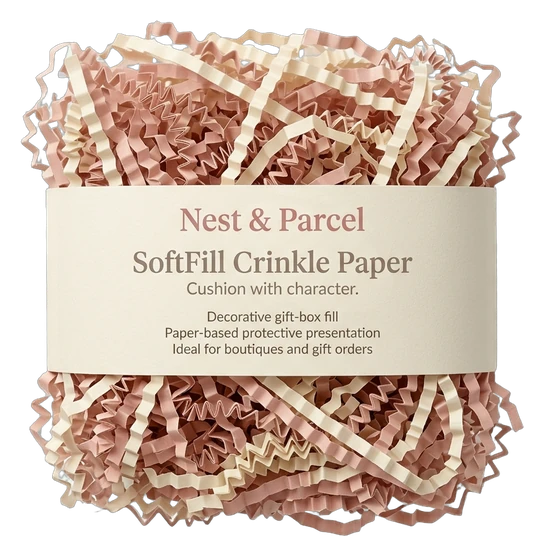
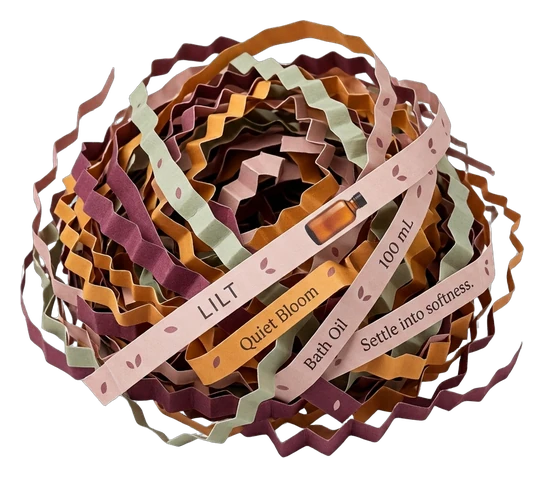
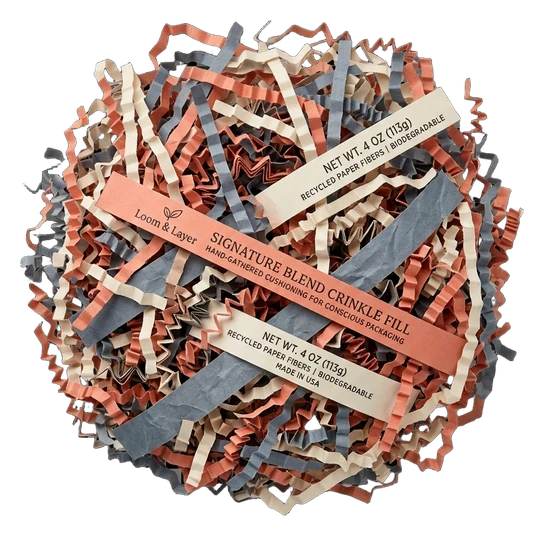
Custom crinkle paper adds a loose paper-fill layer around products inside gift boxes, mailers, baskets, kits, and presentation packaging. Plan the amount, color direction, paper characteristics, box space, product weight, and packing method together so the fill supports presentation and helps limit unnecessary movement without replacing a properly engineered protective packaging system.

Select dimensions in cm, mm, inches, ml, or oz and more — whatever fits your product.

Choose the Stock, printing type, and enter your order quantity.

Upload your ready artwork — or just write “Need Design” and we'll handle it.

Fill in your name, contact number, and email for quick communication.

Solve a quick captcha and hit “Submit Quote” — it takes seconds!

Our expert will reach out ASAP with the best market rate from a top packaging provider.

After You Approve the Quote — Here's What Happens Next


Custom crinkle paper is a loose paper filler used inside boxes, baskets, mailers, gift packs, kits, and other presentation packaging. Its crinkled strips can occupy open space, visually frame the product, and create a softer presentation around the packed item. The right specification depends on more than choosing an attractive color. Product dimensions, remaining box space, packed weight, fill depth, handling, and the role of the outer package should all be considered together.
Measure the product and the usable internal dimensions of the package before estimating the amount of filler. The important question is how much open space remains after every product, divider, insert, accessory, booklet, and other component is placed inside. A shallow gift box holding one lightweight item may need only a presentation layer beneath and around the product. A deeper kit containing several components can require substantially more filler to establish the desired height and separation. Do not automatically use additional crinkle paper to compensate for an oversized box. Where excessive empty space exists, reviewing the box dimensions or adding an appropriate structural insert may create a more controlled packed configuration.
Crinkle paper can have several roles within a package. It may primarily provide decorative presentation, occupy unused space, separate lightweight items, support a product visually, or help reduce casual movement inside the box. Those functions should not be confused with verified transit protection. Loose paper fill does not automatically establish resistance to drops, crushing, vibration, impact, or other distribution hazards. Fragile, heavy, high-value, or movement-sensitive products may need an engineered insert, divider, partition, tray, or suitable outer shipping configuration in addition to decorative fill. Tell the quoting team whether the crinkle paper is mainly for presentation, void filling, light positioning, or a combination of these purposes.
The amount of paper affects what customers see when they open the package. Too little filler can leave the product sitting low inside a deep box. Too much can obscure the product, interfere with closing, increase packing time, or spill excessively when the package is opened. For presentation packs, decide whether the product should sit partially above the paper, remain surrounded by it, or be revealed after the top layer is moved aside. Packing trials are useful when appearance is particularly important. Test the complete configuration with the real product, package, accessories, printed materials, and intended fill amount rather than evaluating loose crinkle paper by itself.
Color can make crinkle paper part of the broader visual presentation. The fill might coordinate with the printed box, provide contrast, support seasonal artwork, distinguish product variants, or create a neutral background around the item. Avoid assuming that any requested custom or exact brand color is automatically available. Crinkle paper is not the same as printing a precise PMS color onto a carton. Available paper colors, blends, shade consistency, dye characteristics, and minimum quantities should be confirmed for the actual Custom Boxes Inc. supply route. Physical color samples or approved material references can be useful when a close visual match matters. Screen images should not be treated as an exact representation of the finished paper color.
The product itself should influence color selection. Light-colored textiles, porous materials, delicate finishes, unfinished surfaces, cosmetics, collectibles, and other sensitive products may require additional consideration before they are packed directly against colored paper. If dye transfer, abrasion, dust, lint, surface marking, or contamination is a material concern, identify it during specification rather than assuming every crinkle-paper option performs identically. A separate tissue wrap, sleeve, bag, carton, or other approved primary layer may be more appropriate when the product should not touch loose fill directly.
Loose crinkle paper behaves differently around lightweight and heavy objects. A small lightweight product may sit naturally within a bed of paper, while a heavy item can compress loose filler and settle toward the bottom of the box. For heavier products, crinkle paper may be best used as a presentation material around a separately supported product rather than as the principal method of positioning it. Tell the team the approximate packed product weight and whether the product already uses an insert, tray, divider, or protective wrap. This helps clarify what role the crinkle fill actually needs to perform.
Gift sets, PR kits, subscription packs, promotional kits, and product bundles can use crinkle paper to visually connect several items within one box. However, loose filler alone does not necessarily prevent products from contacting each other during handling. Consider the shape, weight, finish, and fragility of each component. Bottles, jars, accessories, printed pieces, and lightweight merchandise may behave differently inside the same package. If products must remain in defined positions, structural divisions or inserts may be more suitable. Crinkle paper can then be added around those components to support the intended presentation without carrying the full positioning requirement.
Crinkle paper is normally placed manually or through a packing workflow, so the amount used per package affects both appearance and material consumption. If staff simply grab an unmeasured handful for every order, one package may look full while another appears sparse. Establishing a practical fill target or packing method can help produce a more consistent presentation and improve purchasing forecasts. For repeat programs, test several complete packs and record the approximate amount used per package. Multiply that figure by expected order volume and include reasonable process allowance when planning bulk requirements.
Loose paper filler occupies significant volume compared with flat printed cards or cartons. Consider storage space at the packing location as well as the amount required for each order cycle. Keep the material appropriately stored for the intended application and away from conditions that could affect cleanliness or appearance. If the packed product is especially sensitive to dust or loose fibers, identify that requirement before selecting the fill. For food, cosmetics, medical products, or other applications where direct-contact suitability could matter, do not assume ordinary decorative crinkle paper is approved for direct product contact. The applicable construction and intended use require separate confirmation.
Paper appearance alone does not prove recycled content, recyclability in every location, compostability, biodegradability, or another environmental attribute. If recycled fiber content or another environmental characteristic is important to your packaging program, request the exact material specification and supporting documentation for the selected crinkle paper. Even when a paper product may be accepted by recycling systems, collection and processing capabilities can differ by location. Environmental messaging should therefore reflect the documented material and relevant disposal conditions rather than using broad claims based only on the fact that the filler is paper.
Crinkle-paper requirements are influenced by box dimensions, product volume, desired fill depth, packing density, and order quantity. Two businesses using the same box size can consume different amounts because their products and presentation goals differ Start by producing a representative packed sample when possible. Record the approximate amount of crinkle paper used in one finished pack, then apply that consumption to the expected number of orders. Also identify whether one color will serve the complete program or different product ranges, seasons, campaigns, or brands require separate colors or blends. Multiple color requirements can affect purchasing and production planning.
Send Custom Boxes Inc. your box dimensions, product dimensions and approximate weight, quantity of finished packages, desired fill depth, preferred color direction, number of color variations, intended use, and delivery destination. If the required amount is unknown, describe the completed pack and presentation goal so the filler requirement can be reviewed. Complete the form, email Quotes@Customboxesinc.Com, or call +1 833-565-0363.


Answers to Help You Order with Confidence
Crinkle paper is commonly used as loose paper fill inside gift boxes, baskets, kits, mailers, subscription packaging, and presentation packs. It can occupy open space, surround products, and contribute to the visual presentation. It should not automatically be treated as verified transit protection for fragile or heavy products without evaluating the complete packed configuration.
The amount depends on internal box dimensions, product volume, desired fill depth, packing density, and how much of the product should remain visible. A practical approach is to prepare a representative finished pack and measure the approximate fill consumed. That result can then help estimate requirements for the planned order volume.
Color options may be available, but exact shades, custom color matching, blends, minimum quantities, and consistency need to be confirmed for the selected supply route. If close brand-color coordination is important, request applicable physical references rather than approving the color solely from a screen image.
Crinkle paper can occupy space and may help limit casual movement in suitable applications, but this does not establish tested drop, impact, vibration, compression, or other transit performance. Fragile, heavy, or sensitive products may require inserts, dividers, protective wraps, or another validated packaging solution in addition to decorative loose fill.
Those claims depend on the exact material supplied. Paper appearance alone does not verify recycled fiber content, recyclability everywhere, compostability, or another environmental characteristic. Request the material specification and supporting documentation for the chosen option before publishing an environmental claim about the finished packaging program.
Custom Boxes Inc is a leading manufacturer and supplier of custom packaging boxes tailored for every product and industry. From startups to global brands, we empower businesses across the USA with cost-effective, high-quality, fully personalized packaging solutions — crafted with precision, delivered with speed. Whether you need eco-friendly cardboard boxes, rigid luxury boxes, or branded retail-ready display packaging — we've got you covered with endless customization options, low MOQs, and lightning-fast turnarounds.