

Select dimensions in cm, mm, inches, ml, or oz and more — whatever fits your product.

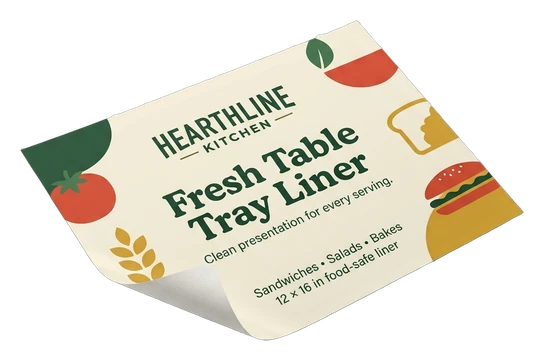
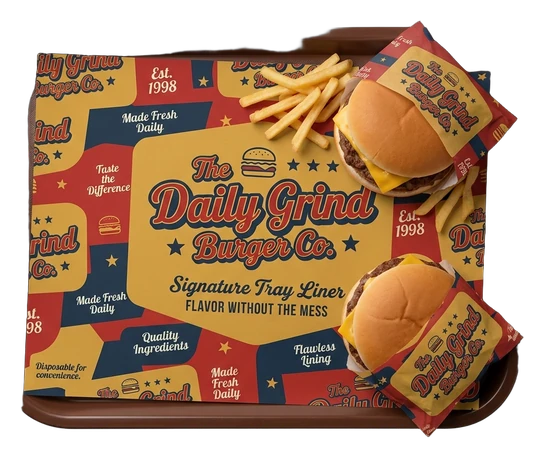
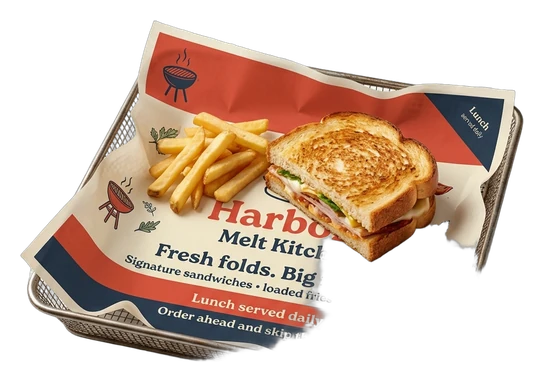
Custom printed tray liners are branded paper sheets made to sit inside serving trays or baskets. Choose the liner around your tray size, food-service conditions, artwork, and required paper performance so the finished piece supports presentation without creating avoidable fit or specification problems.

Select dimensions in cm, mm, inches, ml, or oz and more — whatever fits your product.

Choose the Stock, printing type, and enter your order quantity.

Upload your ready artwork — or just write “Need Design” and we'll handle it.

Fill in your name, contact number, and email for quick communication.

Solve a quick captcha and hit “Submit Quote” — it takes seconds!

Our expert will reach out ASAP with the best market rate from a top packaging provider.

After You Approve the Quote — Here's What Happens Next


Printed tray liners look simple, but a useful specification depends on more than placing a logo on a sheet of paper. The liner has to fit the tray or basket, sit flat enough for the way food is served, carry artwork at a readable scale, and match the expected exposure to grease, moisture, heat, or condensation. Start with the serving setup first, then select paper and printing around it.
Measure the flat area where the liner will actually sit, not only the outside dimensions of the tray or basket. Record length and width in inches, then note rounded corners, raised rims, handles, ribs, or tapered sides that reduce the usable surface. A liner that is too large can bunch against the edges, while one that is too small may look accidental or leave more of the tray exposed than intended. The right fit also depends on how the liner is used. A sheet placed under a wrapped sandwich may need different coverage than a liner used beneath fries, pastries, or a mixed meal. If you already use a standard tray or basket, send its internal measurements, a photo, or a physical reference where practical. If several tray sizes are used, identify each size and whether one artwork should scale across them or each liner needs its own layout.
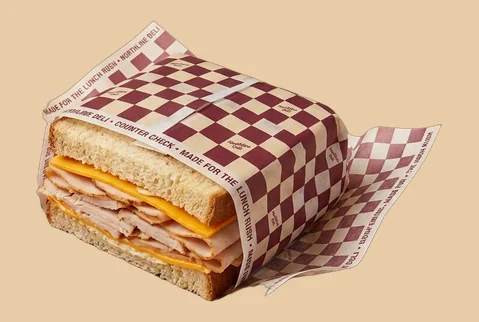
Paper choice should follow the actual food and serving conditions. Dry bakery items, wrapped products, oily foods, sauces, refrigerated items, and hot foods can place different demands on a liner. The important question is not whether a sheet is simply called kraft, white, grease-resistant, coated, or waxed; it is whether the approved paper construction is appropriate for the intended use. For direct food contact, specify what will touch the liner, approximate serving temperature, expected holding time, and whether grease or moisture is present. Custom Boxes Inc. should confirm the suitable paper, coating, and printing configuration for that use before production. If the liner is used only beneath wrapped or contained food, make that clear as well because the contact conditions are different. Paper appearance also changes the printed result. White stock generally gives artwork a cleaner neutral base, while natural kraft changes how colors appear and can support a more understated presentation. The final selection should balance brand appearance, print requirements, handling needs, and the approved construction rather than relying on appearance alone.
Tray liners often give a brand more usable print area than a label, but that does not mean every inch should carry information. Decide what a customer should notice first: the logo, a repeating pattern, a short message, social handle, promotional line, product story, or another useful element. A restrained layout can remain recognizable even when part of the liner is covered by food. For logo-based designs, allow enough clear space around the mark so it remains visible at the expected viewing distance. Repeating patterns can work well when food placement is unpredictable because some branded elements remain visible around the edges. A centered design can suit more controlled plating, while border or corner graphics can leave the middle area visually quieter. Artwork preparation matters at the edges. Provide production-ready AI, PDF, PSD, or EPS artwork when available. The team can use the approved dieline or template to check placement, bleed, and safe areas before the job moves forward. If you only have a lower-resolution reference or an unfinished concept, identify it as a reference so the required artwork work can be confirmed rather than assumed.
The best print route depends on the approved substrate, artwork, number of colors, coverage, and order quantity. Custom Boxes Inc. reports digital, offset, and flexographic printing capabilities across supported packaging work, but the suitable process for tray liners should be confirmed for the selected paper and run. A one-color logo or repeating mark may be sufficient for a simple service presentation. Multi-color artwork can support stronger brand recognition when the paper and printing process reproduce the design as intended. Natural kraft, uncoated white paper, and coated or grease-resistant stocks can display the same color differently, so screen color should not be treated as a promise of the final printed result. Use the digital proof to confirm artwork content, placement, spelling, orientation, and general layout. A digital proof does not establish exact printed color, paper feel, grease resistance, or performance in the food-service environment. When those details are important, ask what physical sample or production reference is appropriate for the project.
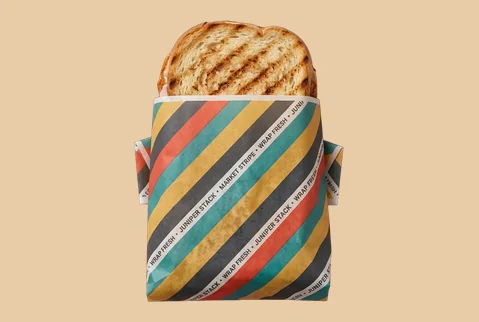
A tray liner moves through more hands than the customer may notice. Staff may pull sheets from a stack, place them quickly during service, load food on top, and clear the tray after use. Dimensions, paper stiffness, surface treatment, and storage conditions can affect how smoothly that routine works. Tell the quoting team whether liners will be stacked at a counter, used in a high-volume food-service line, packed with takeout orders, or prepared for events and catering. Also note whether the sheet needs to fold around an item or remain flat. A flat liner, basket liner, and food wrap can look similar in a product photo but perform different jobs, so the intended handling method should be part of the specification.
Tray-liner pricing depends on the selected paper, dimensions, print method, color coverage, total quantity, number of artwork versions, finishing or treatment requirements, proofing needs, packing, and freight. Larger quantities can improve unit economics in some production routes, but the actual breakpoints depend on the job. Avoid selecting a larger run only from a generic price assumption if the design, menu, promotion, or tray size may change soon. For a useful quote, provide the finished sheet size, quantity, number of designs, preferred paper appearance, printing requirements, intended use, delivery destination, and artwork status. If you do not know the paper specification yet, describe the food, tray, and service conditions instead. That gives the team a better basis for evaluating options than choosing a material name without context. Production timing should be separated from transit. Your quote should confirm when production can begin, which approvals are required, and the applicable production window for the selected paper, quantity, print route, and number of artwork versions. Shipping time begins after the finished order leaves production, so an arrival date should account for both stages.
Send Custom Boxes Inc. your tray or basket dimensions, liner size if already known, quantity, artwork, number of print versions, intended food-contact conditions, and delivery destination. The team can use those details to confirm the suitable paper and print route, prepare or check the artwork layout, and quote the project. Complete the form, email Quotes@Customboxesinc.Com, or call +1 833-565-0363.


Answers to Help You Order with Confidence
Start with the usable inside area of the tray or basket rather than relying only on its outside dimensions. Measure the available length and width and note curved corners, raised edges, handles, or other features that can affect how the paper sits. If you are unsure, send the tray dimensions and reference photos with your quote request.
That depends on the complete liner construction and its intended use, so direct-contact suitability should not be assumed from the paper name alone. Tell us the food type, approximate serving temperature, contact time, and expected grease or moisture exposure. The applicable paper, coating or treatment, and print configuration should be confirmed for that use before production.
The right paper depends on the food, service conditions, desired appearance, printing requirements, and whether direct food contact is involved. White and natural-looking papers can also produce noticeably different printed results. Describe the application first so material selection can be based on the job rather than appearance alone.
Multiple artwork versions may be possible depending on the selected production route and quantities. Tell the quoting team how many designs you need and the quantity required for each version. This allows artwork setup, production planning, and pricing to be evaluated accurately.
Provide your liner dimensions or tray measurements, quantity, number of designs, artwork status, preferred paper appearance, intended use, delivery destination, and any grease or moisture requirements. If some specifications are unknown, describe the serving setup instead of guessing. The team can then identify the remaining details that need Printed Tray Liners | Custom Branded Paper for Food Traysconfirmation.
Custom Boxes Inc is a leading manufacturer and supplier of custom packaging boxes tailored for every product and industry. From startups to global brands, we empower businesses across the USA with cost-effective, high-quality, fully personalized packaging solutions — crafted with precision, delivered with speed. Whether you need eco-friendly cardboard boxes, rigid luxury boxes, or branded retail-ready display packaging — we've got you covered with endless customization options, low MOQs, and lightning-fast turnarounds.