

Select dimensions in cm, mm, inches, ml, or oz and more — whatever fits your product.

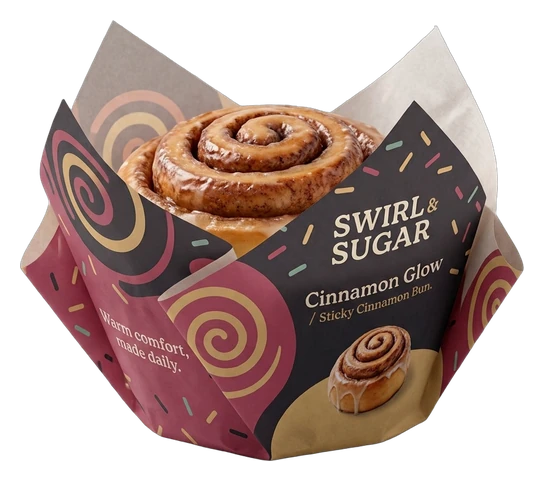
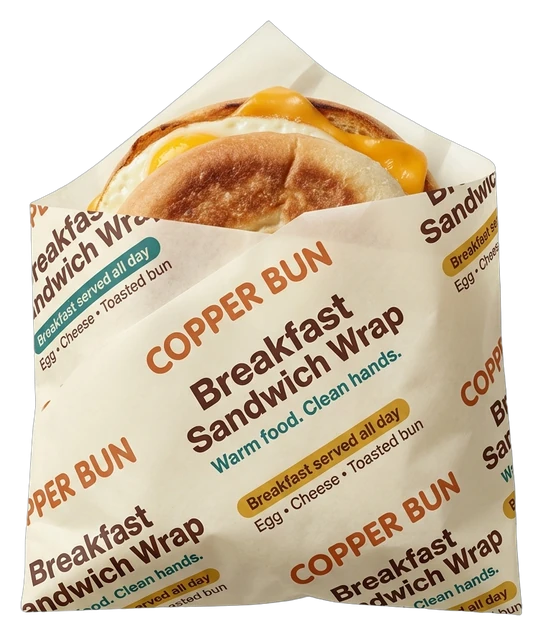
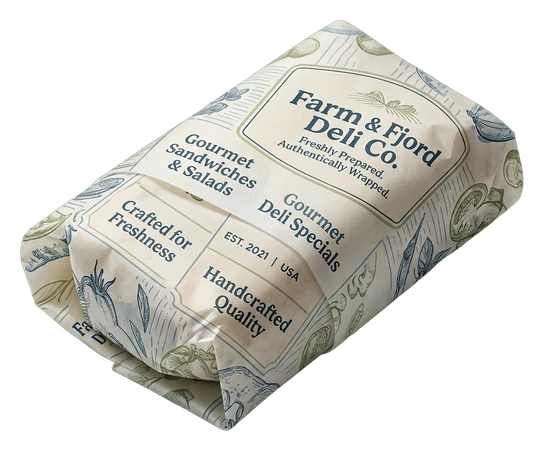
Custom grease proof paper gives food businesses a printed paper format for applications where oils and fats can affect ordinary paper. Plan the sheet around the food, grease exposure, temperature, contact time, dimensions, printing, and intended use so the selected construction matches the actual food-service requirement rather than relying on appearance alone.

Select dimensions in cm, mm, inches, ml, or oz and more — whatever fits your product.

Choose the Stock, printing type, and enter your order quantity.

Upload your ready artwork — or just write “Need Design” and we'll handle it.

Fill in your name, contact number, and email for quick communication.

Solve a quick captcha and hit “Submit Quote” — it takes seconds!

Our expert will reach out ASAP with the best market rate from a top packaging provider.

After You Approve the Quote — Here's What Happens Next


Custom grease proof paper is selected for applications where ordinary paper may be exposed to fats or oils during food preparation, serving, takeaway, display, or handling. The correct specification depends on more than choosing a sheet described as greaseproof. Food type, serving temperature, grease level, moisture, contact duration, wrapping method, printed area, and storage conditions can all change what the paper needs to do. Start with the application, then select the paper and printing around it.
Begin by describing what causes the oil or grease. Fried foods, butter, cheese, meat, sauces, dressings, baked goods, chocolate, and other products can create different levels and types of exposure. A pastry that releases a small amount of butter during short counter service creates a different requirement from hot fried food wrapped immediately after preparation. Also consider where the grease collects. A flat liner may experience concentrated exposure directly beneath the food, while wrapping paper can contact several surfaces once it is folded around an item. Do not assume one greaseproof specification is suitable for every food application.
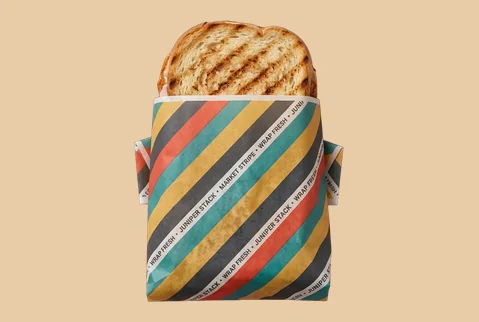
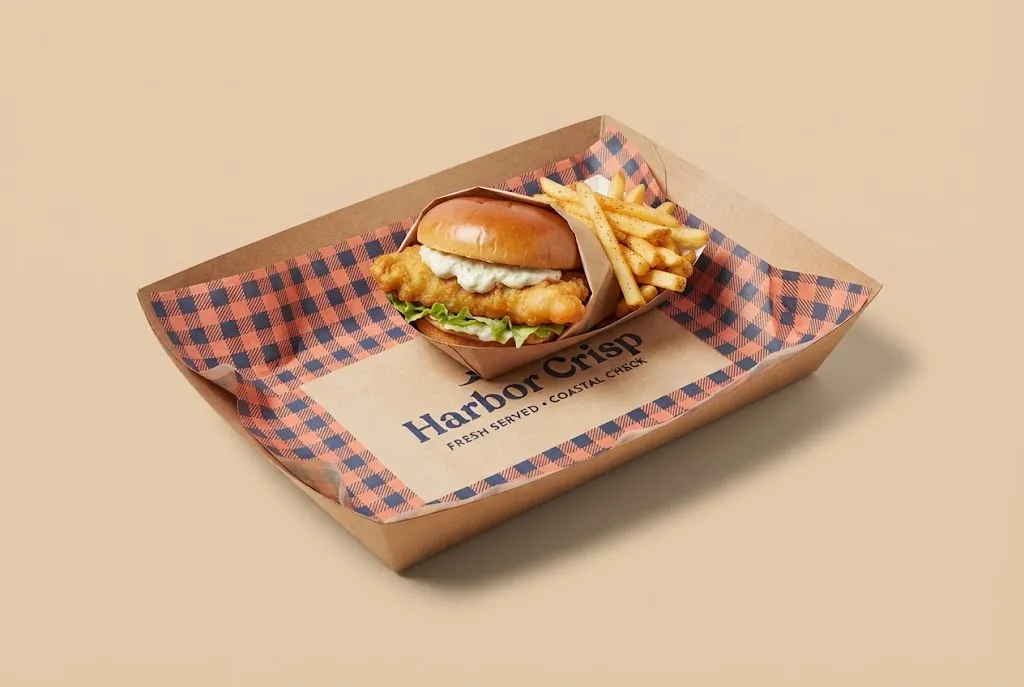
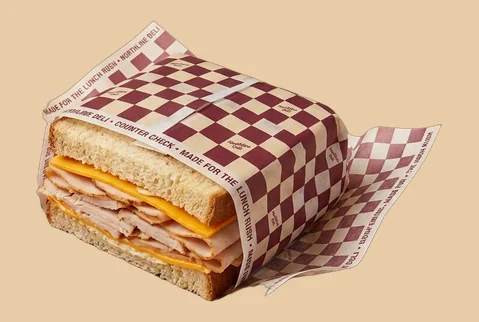
Grease proof paper can serve several packaging functions where the selected construction is suitable. It may wrap sandwiches or prepared foods, line baskets or trays, sit beneath bakery products, separate food portions, interleave suitable products, or provide an internal paper layer inside another food package. The intended use affects dimensions and performance requirements. A sheet used as a flat liner does not need the same fold allowance as paper wrapped fully around a sandwich. Paper used between products may need different handling characteristics from a sheet forming part of a takeaway presentation. Explain the complete use rather than choosing the paper only from a generic product category.
Measure the food or serving surface before selecting the final sheet dimensions. For wrapping applications, record the approximate length, width, and height of the food and allow enough paper for folds, overlap, side closure, or the wrapping technique used by staff. For liners, measure the usable area inside the tray, basket, box, or serving surface. Raised sides, curved corners, and other features may reduce the practical area. If several food sizes will share one sheet, test the largest and smallest common applications. One standard format can simplify stock management when it remains practical across the range, but an oversized sheet can increase waste and slow down wrapping.
“Grease proof” should describe the intended function, not become an unlimited performance promise. Tell the quoting team how oily the food is, approximate packing temperature, expected duration of contact, whether the paper will be folded tightly, and whether pressure will be applied during stacking or handling. A paper used for a short dine-in service may face a different requirement from one holding food during a longer delivery journey. If preventing visible oil penetration or staining is important, state that objective during specification so the suitable paper construction can be reviewed. The exact performance basis should be confirmed before publishing universal claims such as completely greaseproof or leakproof.
Oil resistance and moisture resistance are not automatically the same requirement. Steam from hot food, condensation from refrigerated products, sauces, fresh produce, and other ingredients can introduce water-based moisture in addition to grease. Describe both conditions where they occur. A sheet may need to perform in an environment involving heat, oil, and condensation simultaneously. That combination should be considered when the paper construction is selected rather than assuming grease resistance solves every food-packaging problem.
Where food directly touches the paper, the complete construction matters. FDA describes food-contact substances as substances that come into contact with food, including packaging components and materials applied to packaging such as adhesives and colorants. That means paper fiber alone does not determine suitability. Applicable treatments, coatings, printing components, additives, and other substances may also need to be considered for the intended conditions of use. Provide the food type, temperature, contact duration, grease level, moisture exposure, and whether printed areas can touch the food. Avoid applying a blanket “FDA approved” statement across all Custom Grease Proof Paper configurations unless the specific construction and intended use support the claim.
Grease proof paper can overlap with Deli Paper, Food Wrapping Paper, and Printed Tray Liners, but each page should answer a different buying question.
Custom Grease Proof Paper is centered on the material-performance requirement: selecting a paper solution where grease and oil exposure materially affect the packaging decision. This distinction helps buyers select the appropriate page according to their primary need rather than creating several interchangeable destinations.
Custom branding can turn functional paper into a visible food-service touchpoint. Repeating logos, small wordmarks, restrained patterns, short brand messages, or other simple graphics can remain visible when the paper is folded or partially covered by food. Artwork should be designed around the final sheet dimensions and actual wrapping method. A single oversized logo may disappear underneath the food, while a properly scaled repeating pattern can remain visible across different folds. Custom Boxes Inc. reports digital, offset, and flexographic printing routes across supported packaging work. The applicable printing method, inks, colors, and coverage for Grease Proof Paper should be confirmed for the selected paper construction and food-contact arrangement.
Exterior printing and direct printed-surface food contact are not automatically the same configuration. If only the unprinted side will contact food, identify that arrangement during specification. If the printed surface may touch the product after wrapping or folding, that use needs to be considered as part of the food-contact review.
Custom Boxes Inc. reports artwork assistance including resizing, bleed, safe-area support, and production-file preparation across supported projects. For repeating designs, decide how often the logo or graphic should appear across the sheet. The repeat should remain recognizable without making the paper visually overcrowded. Use the digital proof to check logo size, pattern spacing, spelling, orientation, placement, and general color arrangement. A digital proof does not establish grease performance, food-contact suitability, exact paper feel, or real-world barrier behavior.
Grease proof paper may be used repeatedly throughout a busy service period, so handling matters. Consider how employees pick sheets from a stack, position food, fold the paper, transfer the finished order, and place it into a basket, carton, bag, or other package. A sheet that is difficult to separate or poorly sized for the food can slow the process even if its printed design looks attractive. Tell the team whether the paper will be used at a deli counter, bakery station, restaurant line, food truck, catering operation, takeaway counter, or another workflow where handling requirements affect the specification.
Estimate the number of sheets used during a normal service period and use that figure when planning the order. Consider whether one sheet size and artwork can serve the entire menu or whether different foods require separate sizes or designs. Pricing can change according to sheet dimensions, paper construction, quantity, artwork versions, print coverage, packing, and freight. Larger production quantities may improve unit economics on applicable routes, but inventory planning should still account for menu changes, seasonal artwork, storage space, and branding updates.
Send Custom Boxes Inc. your food type, intended use, approximate serving temperature, sheet dimensions, quantity, grease and moisture conditions, expected contact time, number of artwork versions, printing requirements, and delivery destination. Specify whether the printed or unprinted surface will contact the food. Complete the form, email Quotes@Customboxesinc.Com, or call +1 833-565-0363.


Answers to Help You Order with Confidence
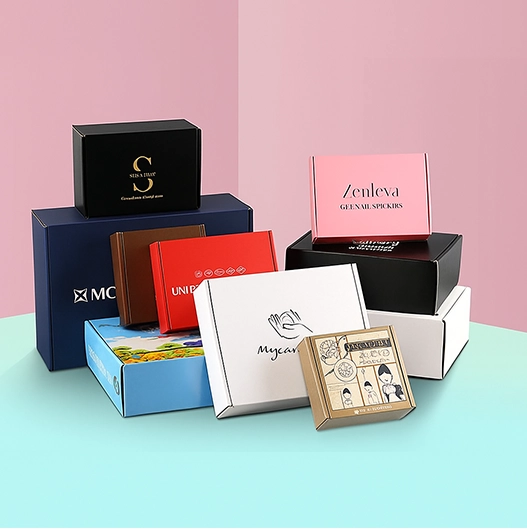
It can be planned for suitable food-service applications involving grease or oil exposure, including wrapping, lining, interleaving, separating, and serving. The exact use should be matched to the selected paper construction, food type, temperature, contact time, grease level, moisture, and printing configuration.
The required grease resistance should be defined for the actual application rather than treated as an unlimited guarantee. Performance can depend on paper construction, treatment, food type, oil level, temperature, pressure, and contact duration. Describe those conditions so the appropriate option and supporting performance information can be reviewed.
Custom printing may be possible on supported configurations. Repeating logos or patterns can be useful because portions of the artwork remain visible after wrapping or food placement. The printing method, ink system, coverage, and compatibility with the paper and food-contact arrangement should be confirmed for the specific project.
Direct food contact depends on the complete paper construction and intended conditions of use. Paper, treatments, coatings, inks, additives, and other applicable components may need to be considered. Provide the food type, temperature, grease and moisture exposure, contact duration, and printed-side arrangement before a direct-contact claim is approved.
That claim should be supported by documentation for the exact supplied material rather than assumed. FDA states that PFAS-containing grease-proofing substances for paper and paperboard food packaging have been phased out of the U.S. market, but product-specific material documentation should still support any PFAS-free claim made for a particular Custom Boxes Inc. paper.
Custom Boxes Inc is a leading manufacturer and supplier of custom packaging boxes tailored for every product and industry. From startups to global brands, we empower businesses across the USA with cost-effective, high-quality, fully personalized packaging solutions — crafted with precision, delivered with speed. Whether you need eco-friendly cardboard boxes, rigid luxury boxes, or branded retail-ready display packaging — we've got you covered with endless customization options, low MOQs, and lightning-fast turnarounds.