

Select dimensions in cm, mm, inches, ml, or oz and more — whatever fits your product.

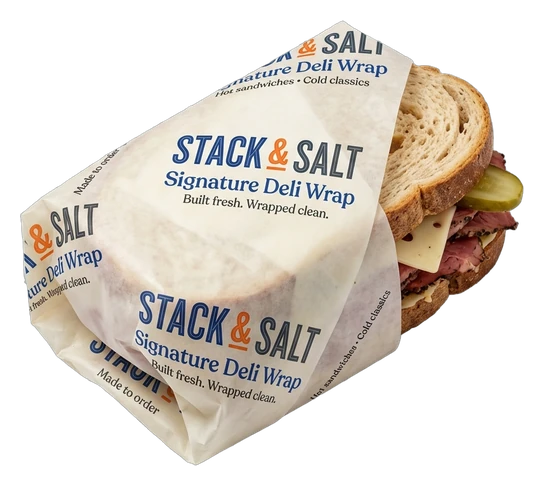
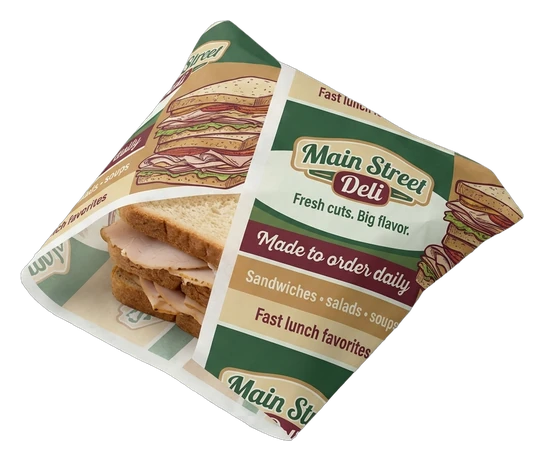
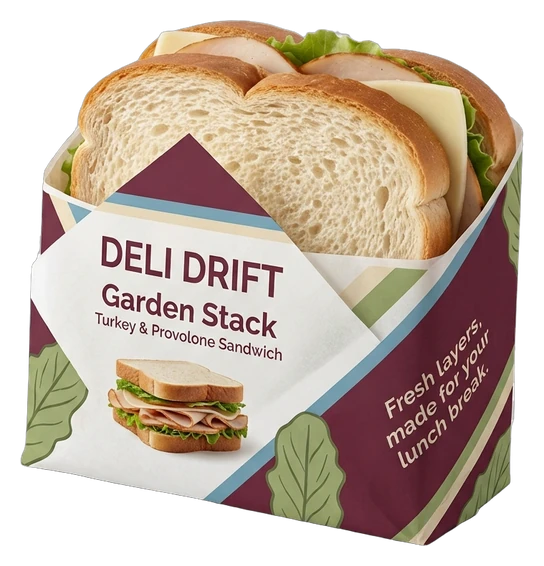
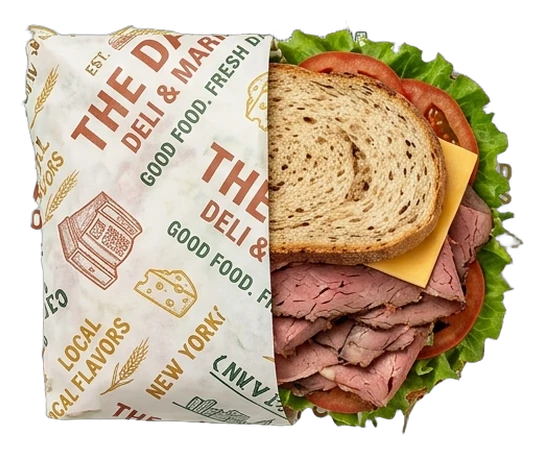
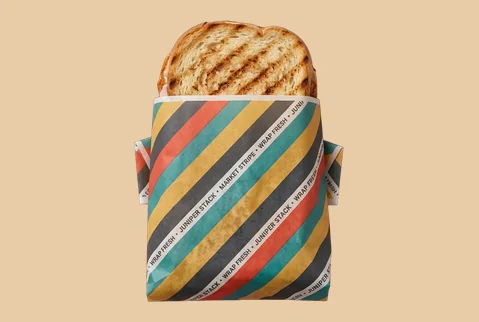
Custom deli paper gives restaurants, sandwich shops, bakeries, cafés, delis, and food-service brands a practical printed sheet for wrapping, serving, lining, or separating suitable foods. Plan the paper around food type, sheet dimensions, direct-contact conditions, grease and moisture exposure, artwork, and service workflow before finalizing the specification.

Select dimensions in cm, mm, inches, ml, or oz and more — whatever fits your product.

Choose the Stock, printing type, and enter your order quantity.

Upload your ready artwork — or just write “Need Design” and we'll handle it.

Fill in your name, contact number, and email for quick communication.

Solve a quick captcha and hit “Submit Quote” — it takes seconds!

Our expert will reach out ASAP with the best market rate from a top packaging provider.

After You Approve the Quote — Here's What Happens Next


Custom deli paper may look like a simple printed sheet, but the correct specification depends on how it will actually be used. A sheet placed between sliced products has a different job from one wrapping a sandwich or lining a serving basket. Food temperature, grease, moisture, fold requirements, sheet size, print coverage, storage, and staff handling can all affect the final choice. Start with the food and service routine, then match the paper and printing to those conditions.
Determine exactly what staff will do with each sheet. Deli paper may be used to wrap sandwiches and other prepared foods, line baskets or trays, separate portions or individual items, sit underneath baked goods, support counter presentation, or provide an additional paper layer inside suitable food packaging. These uses should not automatically receive the same specification. A sheet used briefly beneath a dry bakery item may face different conditions from paper wrapped tightly around a warm sandwich containing cheese, sauce, or oily ingredients. Tell the quoting team whether the paper will make direct contact with food and whether it will be folded, wrapped, stacked, interleaved, or left flat.
Deli Paper and Food Wrapping Paper can overlap, but the product pages should serve different buying needs. Food Wrapping Paper is the broader category for custom paper used to wrap many different food-service products. Deli Paper focuses more specifically on counter-service and prepared-food workflows where individual sheets may be pulled quickly, used for separation, placed under an item, or folded around deli-style food. That narrower use affects purchasing decisions. Sheet dimensions may need to work with a sandwich station, basket, counter setup, bakery case, or portioning routine. Packing speed can be just as important as appearance. Where one paper format will serve several functions, describe all intended uses before the material is confirmed.
Do not choose sheet dimensions only because a particular size is common in the market. Measure the approximate length, width, and height of the item in the condition in which staff will serve or wrap it. If the sheet will fold around the food, allow enough material for the required overlap and side folds. For flat applications, measure the basket, tray, counter area, or portion that the paper needs to cover. An unnecessarily large sheet can increase material use and create extra folding during service. An undersized sheet may leave insufficient coverage or require staff to use multiple pieces. If your business already uses deli paper, provide the current sheet dimensions and explain what you would like to improve.
Grease is one of the most important application details for deli paper. Foods containing oils, butter, cheese, meats, sauces, dressings, or other fatty ingredients can place more demand on the sheet than dry foods. Tell the team how oily the product is, whether the paper will be wrapped tightly around it, and approximately how long the contact will last. Do not assume every deli-paper stock is grease resistant simply because it is sold for food-service use. If grease resistance is required, the applicable paper construction or treatment needs to be identified for the actual application. The same applies to claims such as greaseproof or leak resistant. The paper should be specified around the real food rather than a generic restaurant category.
Moisture can come from sauces, condensation, refrigerated foods, steam, fresh ingredients, or hot prepared products. A cold sandwich containing moist vegetables creates different conditions from a hot grilled sandwich immediately wrapped after cooking. Bakery goods, cheeses, deli meats, and other foods can also create different contact environments. Provide the approximate food temperature and expected contact time when those factors are relevant. The goal is not to make broad heat-resistant or moisture-resistant promises. It is to identify the use conditions that the paper and any applicable coating or treatment need to accommodate.
When Deli Paper directly contacts food, the complete construction matters. The paper, additives, treatments, coatings, printing components, and intended conditions of use may all affect suitability. A generic statement such as “FDA approved deli paper” should therefore not be applied automatically across every custom configuration. Provide the food type, temperature, duration of contact, grease or moisture conditions, and whether the printed surface itself may contact the food. Custom Boxes Inc. should confirm the applicable paper and supporting documentation for the intended use before a direct-food-contact claim is published or approved for production.
Deli paper can provide a useful branding surface because customers may see the sheet during serving, carrying, eating, or opening the food. Repeating logos and patterns are often practical for this application because portions of the artwork can remain visible even when different foods are wrapped in different positions. Think about the size of each repeat relative to the finished sheet. An oversized logo may disappear beneath the food, while extremely dense artwork can make the sheet visually busy. Directional text should also be planned carefully because wrapping changes which direction different portions of the sheet face. A more flexible repeating design may work better where staff do not position every product identically.
Deli Paper normally works best as a branding surface rather than a substitute for a full product label. Logos, short brand messages, web or social information, simple promotional elements, or restrained graphics may fit naturally into the design. Avoid crowding the sheet with detailed instructions, ingredient claims, nutritional information, allergen statements, or other regulated product information unless the business has determined that the deli paper is the appropriate place for it and supplied approved content. Any food or nutritional claims should come from the responsible business rather than being created from the artwork concept.
Provide production-ready AI, PDF, PSD, or EPS artwork where available. Custom Boxes Inc. reports artwork support across supported print projects, including resizing, bleed, and safe-area assistance. The precise production requirements for Deli Paper should still be confirmed according to the selected paper and printing process. For repeating artwork, check spacing, logo scale, orientation, and how the design reaches the edges of the sheet. Use the proof to confirm spelling, branding, layout, repeat pattern, orientation, and general color expectations. A digital proof does not establish exact final color, grease resistance, moisture performance, paper feel, or food-contact suitability.
Custom Boxes Inc. reports digital, offset, and flexographic routes across supported packaging projects, but the applicable printing method for Deli Paper should be confirmed specifically for the selected stock, quantity, artwork, ink requirements, and intended food-contact conditions. Simple one-color branding may suit many deli applications, while other projects may require more extensive artwork. Paper color can affect the finished appearance. White and natural-colored sheets may reproduce identical artwork differently. If close brand-color matching matters, review the applicable proofing or physical-reference options rather than treating a computer monitor as an exact printed-color standard.
Estimate usage from the number of sheets consumed during a normal day, week, or month rather than ordering from an arbitrary bulk quantity. Consider whether several sizes or artwork versions are required. A restaurant group may need different branding by location, while a menu may use one sheet size for sandwiches and another for baskets or bakery items. Pricing can be affected by sheet dimensions, paper specification, quantity, number of artwork versions, printing requirements, packing, and freight. Larger runs may improve unit economics on applicable production routes, but the actual quantity should reflect expected consumption, branding changes, storage capacity, and menu updates.
Send Custom Boxes Inc. your food type, intended sheet use, approximate serving temperature, desired dimensions, quantity, grease or moisture requirements, artwork versions, printing needs, existing paper specification if available, and delivery destination. If you are unsure about the paper construction, describe exactly how staff will use it and how it will contact the food. Complete the form, email Quotes@Customboxesinc.Com, or call +1 833-565-0363.


Answers to Help You Order with Confidence
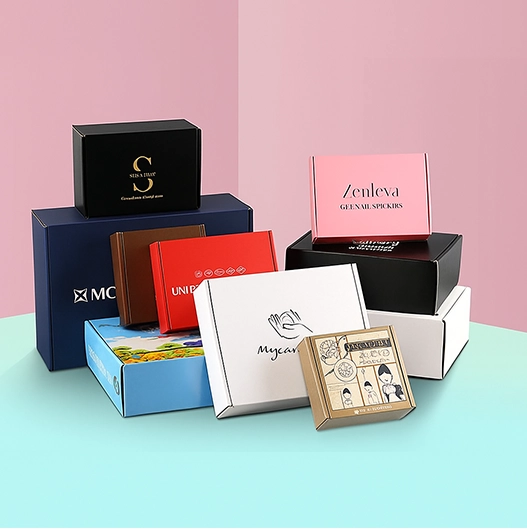
Deli Paper can be planned for suitable applications such as wrapping sandwiches and prepared foods, separating individual food items, lining baskets or trays, and presenting bakery or deli products. The appropriate use depends on the selected paper construction and actual food-contact conditions. Tell the team exactly how the sheet will be used before finalizing the specification.
Grease-resistant Deli Paper configurations may be possible, but grease performance should not be assumed for every paper. Provide the food type, approximate temperature, oil or sauce exposure, contact time, and wrapping method. The applicable material or treatment can then be evaluated against the intended application.
Custom printing may be possible on supported Deli Paper configurations. Repeating logos or patterns can be useful because portions of the design may remain visible after wrapping or food placement changes. Printing processes, inks, colors, coverage, paper compatibility, and food-contact conditions should be confirmed for the specific project.
Measure the food, basket, tray, or serving area according to how the sheet will actually be used. Wrapped foods normally require additional paper for folds and overlap rather than a sheet matching only the product footprint. If you already use Deli Paper successfully, provide the existing sheet dimensions as a reference.
A blanket FDA-approved claim should not be applied to every Deli Paper configuration. Food-contact suitability depends on the specific paper, treatments, coatings, printing components, food type, temperature, and conditions of use. The applicable construction and documentation should be confirmed for the intended application before making a food-contact compliance claim.
Custom Boxes Inc is a leading manufacturer and supplier of custom packaging boxes tailored for every product and industry. From startups to global brands, we empower businesses across the USA with cost-effective, high-quality, fully personalized packaging solutions — crafted with precision, delivered with speed. Whether you need eco-friendly cardboard boxes, rigid luxury boxes, or branded retail-ready display packaging — we've got you covered with endless customization options, low MOQs, and lightning-fast turnarounds.