

Select dimensions in cm, mm, inches, ml, or oz and more — whatever fits your product.

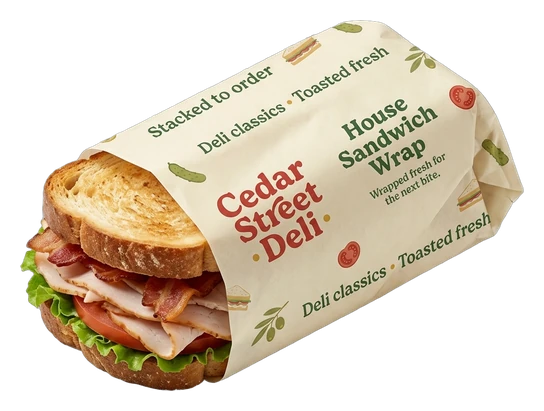
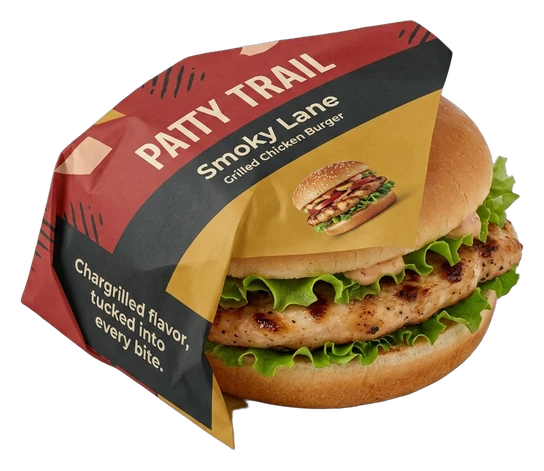
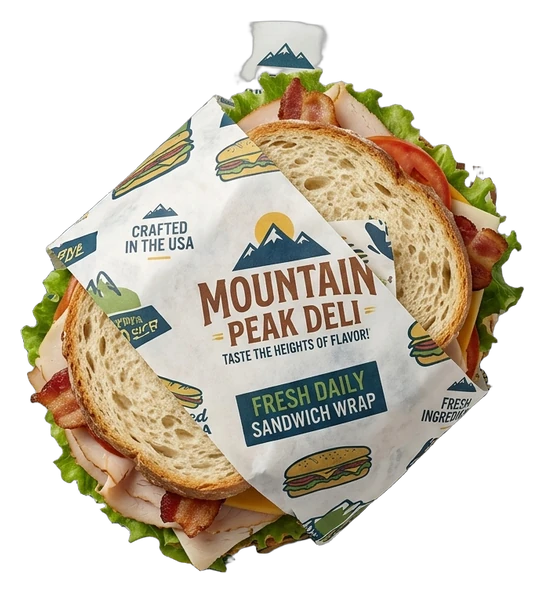
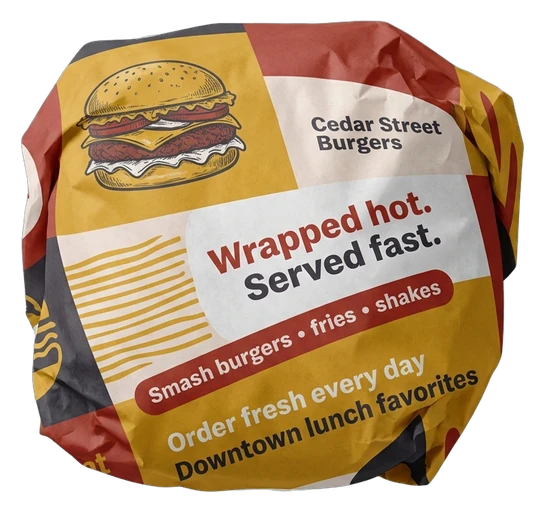
Custom food wrapping paper gives restaurants, bakeries, cafés, food trucks, delis, and other food businesses a printed paper format for wrapping or presenting suitable foods. Plan the sheet around food type, serving temperature, grease or moisture exposure, dimensions, print coverage, and actual contact conditions before selecting the final material.

Select dimensions in cm, mm, inches, ml, or oz and more — whatever fits your product.

Choose the Stock, printing type, and enter your order quantity.

Upload your ready artwork — or just write “Need Design” and we'll handle it.

Fill in your name, contact number, and email for quick communication.

Solve a quick captcha and hit “Submit Quote” — it takes seconds!

Our expert will reach out ASAP with the best market rate from a top packaging provider.

After You Approve the Quote — Here's What Happens Next


Food wrapping paper has to do more than carry a logo. Depending on the application, the sheet may touch hot, cold, dry, oily, buttery, moist, or sauced foods while being folded, wrapped, stacked, carried, or placed inside another package. Start with the actual food and service conditions, then select the paper, dimensions, print configuration, and any required barrier treatment around that use.
First identify whether the sheet will fully wrap the food, partially wrap it, sit beneath it, separate individual items, line another food package, or provide a presentation layer inside a basket or container. A sandwich wrapped for takeaway creates different demands from a pastry separated inside a bakery box. A burger, fries, taco, deli item, baked product, or dry snack may expose the paper to different levels of oil, moisture, heat, and handling. Describe the application instead of choosing a material only from its name. The complete use condition helps determine which paper construction should be evaluated.
Food Wrapping Paper and Printed Tray Liners can use similar-looking sheets, but their primary jobs are different. A tray liner normally sits beneath food or inside a serving tray or basket. Wrapping paper may fold around the food, overlap, tuck underneath it, or remain in closer contact across several surfaces. That difference affects sizing and material decisions. A flat liner can often be measured from a tray's usable area. Wrapping paper needs enough width and length to accommodate the food dimensions plus the folds or overlap needed for the intended wrapping method. If one sheet will serve both purposes, describe both uses so the selected construction can be evaluated accordingly.
Do not select sheet dimensions only from a standard menu name. Measure the approximate length, width, and height of the food in the condition in which it will be wrapped. Allow additional material for folding, overlap, side closure, or the wrapping technique used by staff. A sheet that only matches the top dimensions of a sandwich will not necessarily provide enough paper to wrap beneath it. Service speed can also influence size. Staff should not have to repeatedly reposition an undersized sheet during busy food preparation. At the same time, unnecessarily oversized sheets can increase material use and change presentation. If you currently use wrapping paper successfully, provide its finished sheet dimensions as a starting reference along with the food it serves.
Grease resistance should be treated as a performance requirement rather than a visual feature. Tell the quoting team whether the food contains oils, butter, sauces, cheese, meat juices, frosting, or other ingredients that may transfer to the paper. Moisture exposure also matters. Steam, condensation, refrigerated foods, sauces, and freshly prepared hot foods can create conditions that differ from dry bakery or confectionery products. The relevant paper, coating, treatment, printing system, and intended food-contact use should be confirmed together. A kraft appearance or coated-looking surface alone does not establish grease resistance, moisture resistance, or suitability for direct food contact. If resistance performance is essential to the application, define the expected food and holding conditions rather than relying only on a generic material description.
Food-contact suitability depends on the complete construction and intended conditions of use. Paper fiber, coatings, grease-resistant treatments, adhesives where applicable, colorants, and printing components can all matter. Do not apply a blanket “FDA-approved” or “food-safe” description to every Food Wrapping Paper configuration. The selected materials and substances need an applicable basis for their intended food-contact use. Tell the team what food will touch the paper, whether the contact is direct, approximate temperature, expected duration, and whether grease or moisture is present. These details help distinguish the intended application from another food-packaging use that may look similar but operate under different conditions.
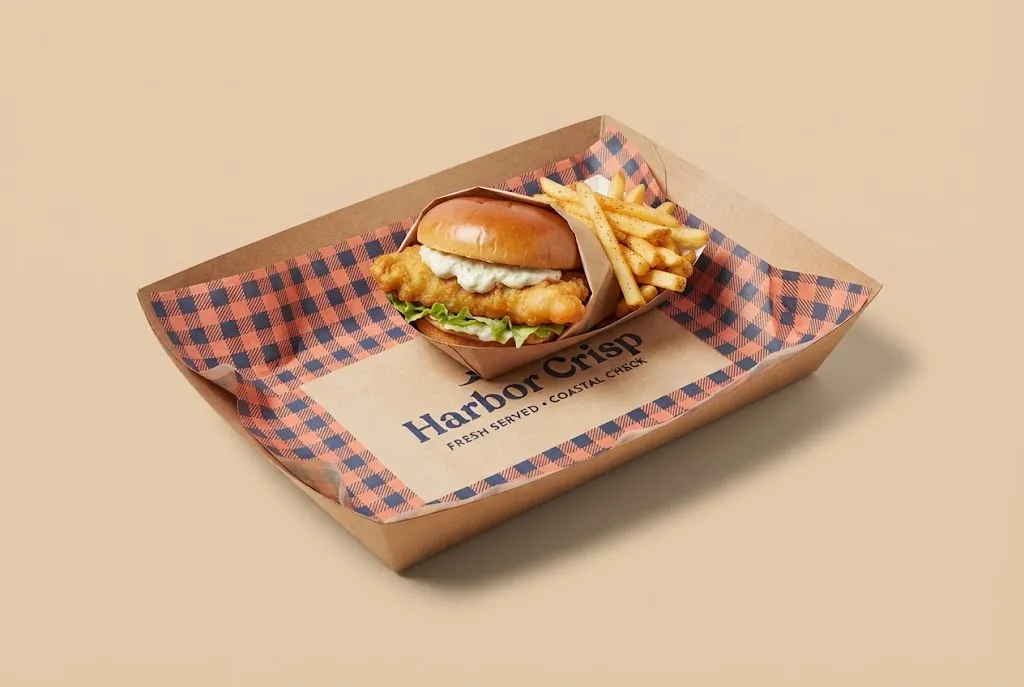
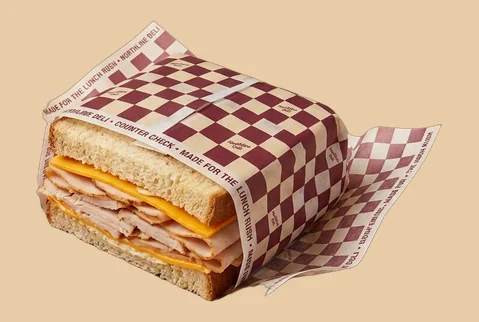
Custom printing turns wrapping paper into a visible brand surface, but the artwork should be planned around the sheet's actual use. A repeating logo or pattern can work well because parts of the design remain visible after folding. A single large centered logo may be appropriate for some presentation methods but can disappear underneath the food when the sheet is wrapped. Consider how folds change artwork orientation. A repeated pattern can tolerate different wrapping positions more easily, while directional text may need more careful placement. Printing requirements must also be compatible with the approved paper and food-contact configuration. Do not assume that a printing ink appropriate for the outside of one package is automatically appropriate for another configuration where printed areas may contact food.
When using repeating artwork, decide the approximate scale and spacing of the logo, icon, message, or brand pattern before production. Very large repeats may leave finished wraps with little visible branding, while extremely small repeats can make the sheet visually busy. The correct balance depends on sheet dimensions, food size, and how the paper is folded. Provide production-ready AI, PDF, PSD, or EPS artwork when available. Custom Boxes Inc. reports artwork assistance for supported projects, including resizing, bleed, and safe-area preparation. Use the proof to check logo orientation, pattern spacing, wording, colors, and overall layout. A digital proof demonstrates artwork arrangement; it does not establish grease performance, food-contact compliance, paper feel, or exact final printed color.
Custom Boxes Inc. reports digital, offset, and flexographic printing routes across supported packaging projects, along with CMYK, PMS or spot-color capabilities. The suitable printing route for Food Wrapping Paper should be confirmed for the selected sheet material, food-contact application, quantity, artwork, and required print coverage. A one-color repeating logo can create a clean branded presentation without requiring complex artwork. Multi-color designs may be suitable where the approved paper and printing configuration support them. Color appearance can change according to the substrate. Natural kraft and white papers will not necessarily reproduce identical colors, and a digital screen should not be treated as a promise of exact printed appearance.
Consider how the sheets will be stored and used during service. Food wrapping paper may be stacked near a preparation station, pulled quickly during peak periods, folded around fresh food, or placed into another package. The sheet needs to work with the actual preparation routine. Tell the team if a particular wrapping method, fold, orientation, or dispenser setup affects the required dimensions. Also consider whether the wrapped food will then be placed inside a bag, carton, clamshell, tray, or delivery package. The wrapping paper should be evaluated as one part of that overall packed configuration rather than being expected to perform every containment or transport function by itself.
Food Wrapping Paper pricing can vary with sheet dimensions, paper specification, grease or moisture requirements, total quantity, artwork versions, print colors or coverage, packing, and freight. Provide quantities by design when different restaurant locations, menu ranges, seasonal campaigns, or brands require separate artwork. Similar sheet dimensions do not make different artwork versions one production file. Production timing should be confirmed after the material, food-contact configuration, artwork, payment, and other required details are approved. Keep transit separate from production when planning an in-hand date.
Send Custom Boxes Inc. your food type, contact conditions, serving temperature, desired sheet dimensions, quantity, number of artwork versions, paper preference if known, grease or moisture requirements, printing needs, artwork files, and delivery destination. If you are unsure which paper is appropriate, describe exactly how the food will be wrapped and served. Complete the form, email Quotes@Customboxesinc.Com, or call +1 833-565-0363.


Answers to Help You Order with Confidence
Potential applications include sandwiches, burgers, bakery items, deli products, snacks, and other foods where the selected paper construction is appropriate for the actual use. Suitability depends on factors such as direct contact, temperature, grease, moisture, holding time, and wrapping method. Confirm the chosen material for the specific food application before production.
Grease-resistant constructions may be available, but resistance should not be assumed for every paper. Tell the team what food will contact the sheet, how oily it is, its approximate temperature, and how long contact is expected. The applicable paper or treatment can then be evaluated for that requirement.
Printing may be available on supported Food Wrapping Paper configurations. Repeating logos and patterns are often practical because branding can remain visible after the sheet is folded around food. The print process, inks, colors, coverage, and compatibility with the intended food-contact construction should be confirmed for the actual job.
Measure the approximate length, width, and height of the food and consider how the sheet must fold or overlap around it. The final sheet normally needs more area than the food's simple top footprint. Providing an existing sheet size or explaining your current wrapping method can help with format planning.
A blanket “FDA-approved” statement should not be applied to every configuration. Food-contact suitability depends on the specific paper, coatings or treatments, printing components, and conditions of intended use. Provide the food type, contact method, temperature, grease or moisture conditions, and intended use so the applicable construction and supporting documentation can be confirmed.
Custom Boxes Inc is a leading manufacturer and supplier of custom packaging boxes tailored for every product and industry. From startups to global brands, we empower businesses across the USA with cost-effective, high-quality, fully personalized packaging solutions — crafted with precision, delivered with speed. Whether you need eco-friendly cardboard boxes, rigid luxury boxes, or branded retail-ready display packaging — we've got you covered with endless customization options, low MOQs, and lightning-fast turnarounds.