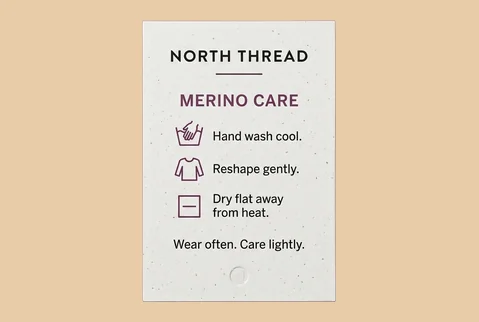


Select dimensions in cm, mm, inches, ml, or oz and more — whatever fits your product.

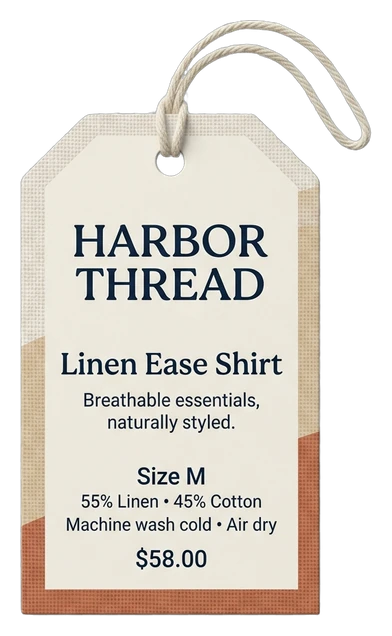

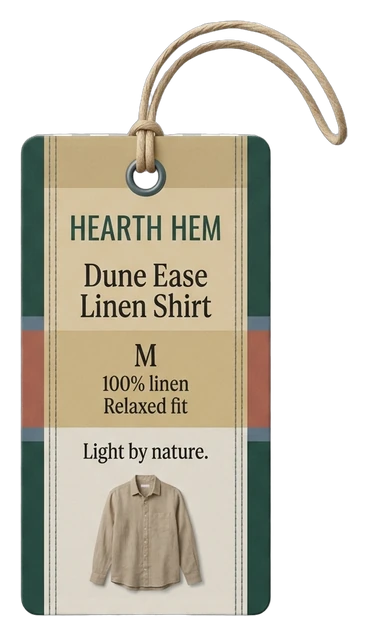
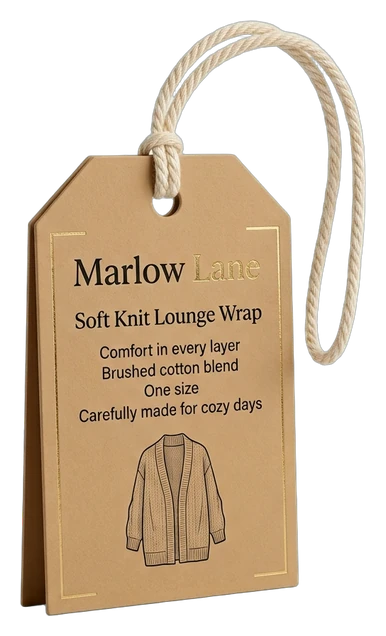
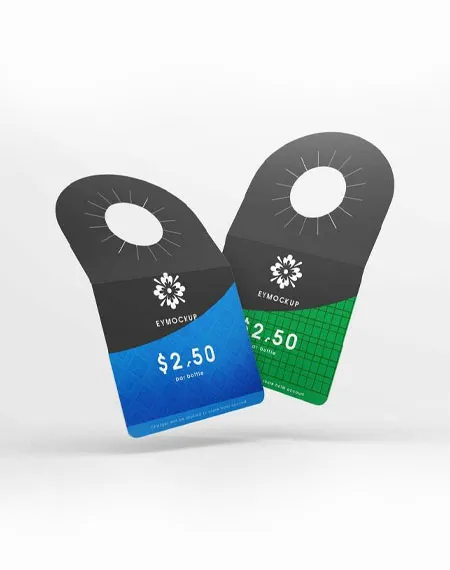
Custom swing tags attach printed branding and product information directly to apparel, accessories, gifts, packaged goods, and other retail products. Plan the tag around its size, stock, hole position, attachment method, artwork, information, and handling requirements so it stays practical for merchandising while supporting a consistent branded presentation.

Select dimensions in cm, mm, inches, ml, or oz and more — whatever fits your product.

Choose the Stock, printing type, and enter your order quantity.

Upload your ready artwork — or just write “Need Design” and we'll handle it.

Fill in your name, contact number, and email for quick communication.

Solve a quick captcha and hit “Submit Quote” — it takes seconds!

Our expert will reach out ASAP with the best market rate from a top packaging provider.

After You Approve the Quote — Here's What Happens Next


Swing tags are printed tags designed to hang from or attach to a product rather than sit loose inside its packaging. They can carry a logo, product name, size, price, barcode, care information, material details, QR code, short brand message, or another relevant retail communication. The most useful specification starts with the product and attachment point, then coordinates tag dimensions, stock, artwork, hole position, and printing around that physical use.
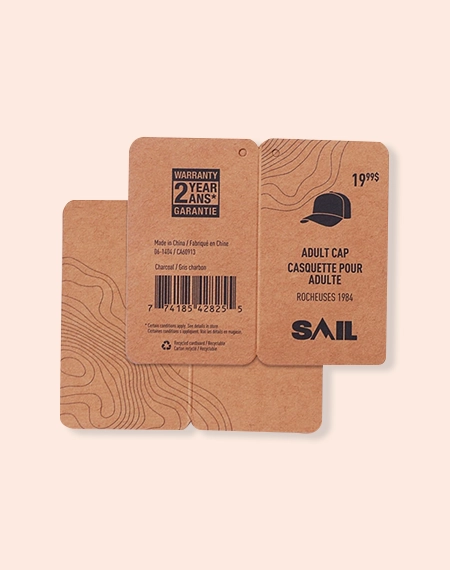
Start with the information customers or retail staff actually need. An apparel tag may need the brand, garment size, product reference, price, care direction, or fiber information supplied by the brand. A gift or handmade-product tag may place more emphasis on the maker, product story, variant, or price. Another retail tag may mainly support a barcode, SKU, QR code, or product identifier. Do not add every possible field simply because the card has two printable sides. Give the most important information stronger visual priority and move secondary details to the reverse when the chosen production route supports front-and-back printing. Where labeling, composition, country-of-origin, warning, regulatory, or legally required information applies, the responsible product owner should provide and approve that wording. The swing-tag printer should not invent mandatory product information.
Swing-tag dimensions should feel proportionate to the item being tagged. A tag that works on a jacket may overwhelm a small accessory, while an extremely small tag may not provide enough room for pricing, barcode information, care notes, or readable branding. Consider both width and height along with the orientation in which the tag will hang. A vertical design can work well when the attachment sits near the top, while a wider horizontal format may suit another product or layout. Also consider what happens when the item is handled on a rack, shelf, display, or during packing. The tag should not unnecessarily cover an important product feature or become so large that it catches against nearby merchandise. If one tag size needs to work across a complete product family, provide examples of the smallest and largest products so a practical common size can be evaluated.
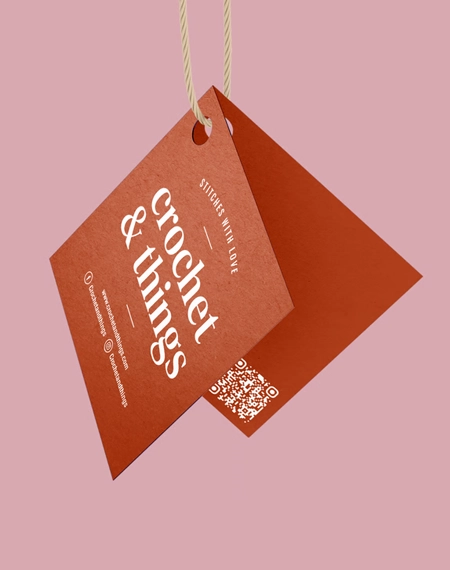
The attachment point is part of the structure, not an afterthought. A hole placed too close to important text or a logo can interfere with the artwork, while a poorly positioned hole can make the tag hang at an unintended angle. Identify where the tag will connect to the product before the final artwork is prepared. The appropriate location may be top center, toward a corner, or another position depending on the tag orientation and attachment method. Swing tags in the wider print market commonly use drilled or punched holes with string, cord, ribbon, twine, loops, pins, or other fasteners. However, Custom Boxes Inc.’s exact hole sizes, eyelets, string materials, attachment components, and pre-stringing capabilities should be confirmed for this specific product before publication or quoting. Leave adequate safe space between the attachment area and critical printed information.
Swing tags are frequently handled before purchase, so stock selection should consider stiffness, surface appearance, printing requirements, and the way the product is merchandised. White cardstock provides a neutral base for artwork, while kraft can create a different visual character and affect printed color. Coated and uncoated surfaces can also change appearance, tactile feel, glare, and writability. Custom Boxes Inc. reports cardstock and kraft among its supported material routes. The exact board type, caliper, finish, and applicability to Swing Tags should be confirmed for the requested configuration. If retail staff need to handwrite prices, sizes, batch information, or another variable detail, identify that requirement before choosing a coating or lamination. A surface selected only for visual effect may not provide the writing behavior required in day-to-day retail use.
Prepare the artwork using the actual finished tag dimensions and planned hole location. Keep logos, barcodes, QR codes, pricing, product references, and other critical information within the applicable safe area. If color or background artwork extends to the trimmed edge, include the required bleed. A full-bleed layout should still leave enough room around the hole so important graphics are not visually interrupted. Custom Boxes Inc. reports artwork support for AI, PDF, PSD, and EPS files along with resizing, bleed, safe-area, and template or dieline assistance across supported projects. Production-ready artwork is preferable, while screenshots or low-resolution references should be identified as references. If the artwork contains retailer barcodes or QR codes, verify the encoded information before approval and test the completed printed application where scanning performance matters.
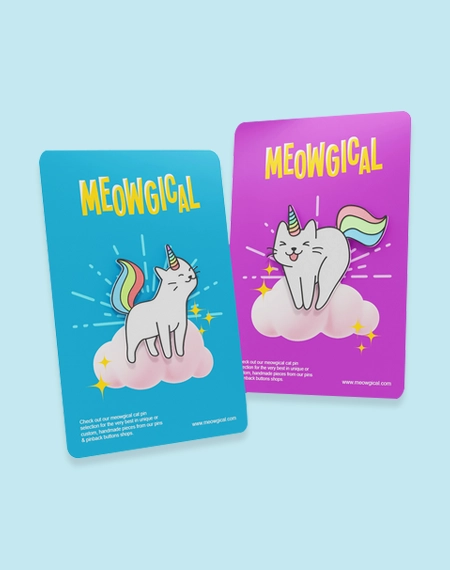
When two-sided printing is supported for the selected configuration, divide information according to priority rather than duplicating the same layout. The front might carry the brand, logo, collection name, or product identity. The back can hold pricing, size, product details, care information, barcode data, website details, or another secondary message. A folded tag may provide additional surfaces where that construction is actually available, but additional panels should serve a real information need. Do not turn a simple hang tag into a complicated booklet merely to create more printing space.
Retail programs often require several versions of the same tag. Different products may need separate sizes, colors, prices, barcodes, product names, materials, languages, or care information even when the overall visual design stays consistent. Create a version schedule that identifies each product or SKU, artwork filename, quantity, printed information, barcode or QR data, and any attachment difference. This becomes particularly important when tags look almost identical. A small change in size designation, barcode, pricing, or product reference can still make it a separate production file.
Providing quantities by version also gives the quoting team a clearer basis for production planning than supplying only one combined total.
Custom Boxes Inc. reports digital, offset, and flexographic printing routes, plus CMYK, PMS or spot-color printing, white ink on kraft, and selected finishing capabilities across supported packaging work. The appropriate print method for Swing Tags should be confirmed according to stock, quantity, artwork versions, color requirements, and finish. Foil, embossing, debossing, lamination, coatings, or another decorative process may be considered when supported and when it contributes to the intended presentation. The finish should not interfere with critical product information, scanning, handwriting, or attachment areas. Use the proof to review product names, sizing, prices, spelling, barcode or QR placement, orientation, hole position, version identification, and other artwork details before production. A digital proof is an artwork approval tool; it does not demonstrate exact finished stock feel, final color, coating texture, or physical attachment behavior.
Swing-tag pricing can change with dimensions, stock, quantity, number of artwork versions, print coverage, finishing, cutting or tooling requirements, hole preparation, attachment components, packing, and freight. Provide the complete requirement rather than requesting a price based only on tag dimensions. If strings, ribbons, eyelets, loops, pins, or pre-attachment services are needed, identify them so their availability and effect on the quote can be confirmed. Production timing should also be separated from transit. The applicable schedule can be confirmed after artwork approval, payment, material selection, and structural details are complete.
Send Custom Boxes Inc. your product type, desired tag dimensions, quantity, number of artwork or SKU versions, stock preference, printing requirements, hole position, required attachment method, finishing requests, artwork files, and delivery destination. If some details remain undecided, explain how the tag will hang from the product and what information it needs to carry. Complete the form, email Quotes@Customboxesinc.Com, or call +1 833-565-0363.



Answers to Help You Order with Confidence
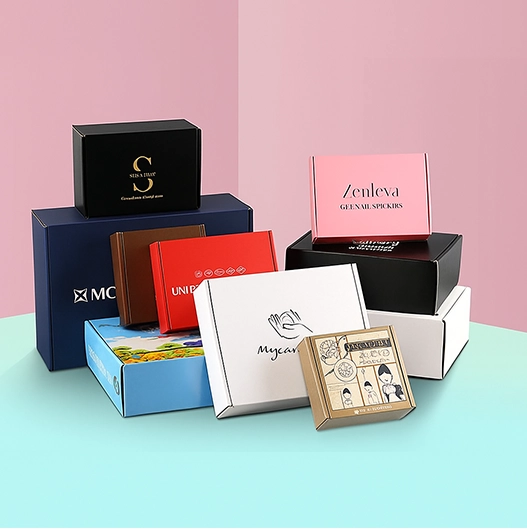
Swing Tags can carry branding, product names, prices, sizes, SKUs, barcodes, QR codes, care information, material details, websites, or other relevant product information. Prioritize what customers and retail staff need to see. Any mandatory labeling, regulatory, composition, origin, or safety information should be supplied and approved by the responsible product owner.
The terms are commonly used for the same general type of printed tag attached to merchandise, although terminology can vary by market and supplier. “Swing tag” is particularly common in some markets, while “hang tag” is widely used in the United States. The actual specification should be defined by size, stock, hole, attachment, artwork, and use rather than terminology alone.
A hole or other attachment preparation can be part of the tag specification, but exact hole sizes, positions, strings, ribbons, cords, eyelets, loops, pins, and pre-stringing services need to be confirmed for the requested Custom Boxes Inc. configuration. Tell the quoting team exactly how the finished tag needs to attach to the product.
Multiple artwork versions may be possible depending on quantity, stock, print method, finishing, and production setup. Provide the SKU, artwork file, quantity, price, barcode, size, or other variable information for each version. Clear version control is particularly important when several tags share nearly identical artwork.
Provide the tag dimensions, product type, total quantity, quantities by artwork version, stock preference, printing requirements, hole position, attachment needs, requested finishes, artwork files, and delivery destination. If the format is still undecided, describe where the tag will attach and what information it needs to display so the specification can be reviewed.
Custom Boxes Inc is a leading manufacturer and supplier of custom packaging boxes tailored for every product and industry. From startups to global brands, we empower businesses across the USA with cost-effective, high-quality, fully personalized packaging solutions — crafted with precision, delivered with speed. Whether you need eco-friendly cardboard boxes, rigid luxury boxes, or branded retail-ready display packaging — we've got you covered with endless customization options, low MOQs, and lightning-fast turnarounds.