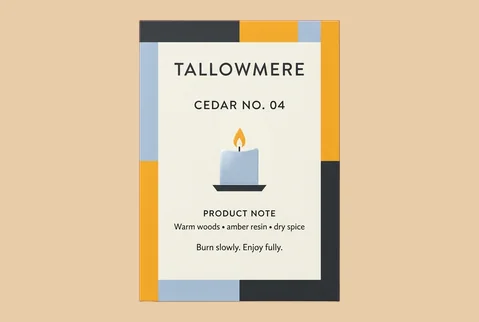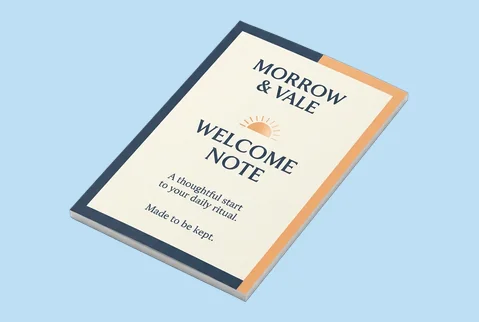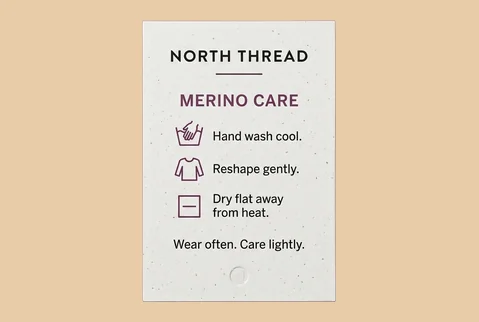


Select dimensions in cm, mm, inches, ml, or oz and more — whatever fits your product.

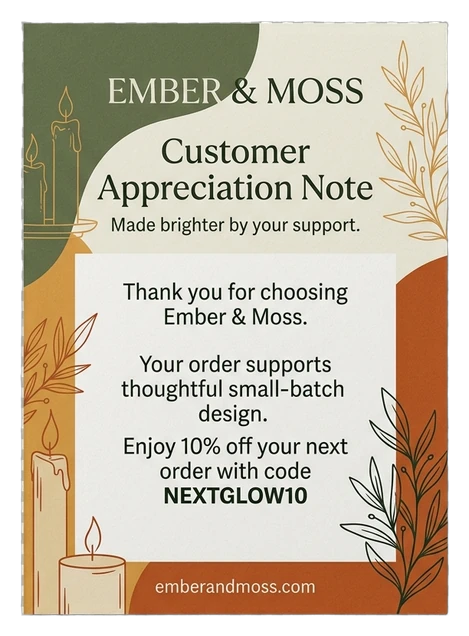
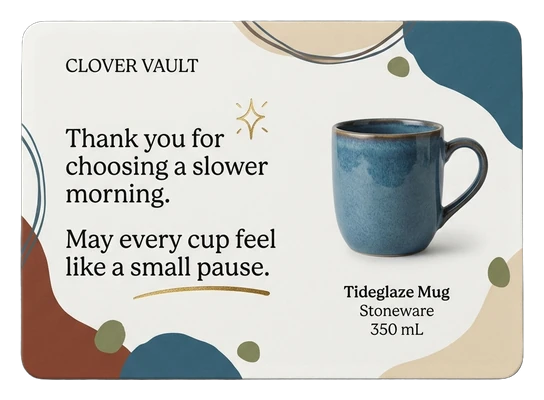
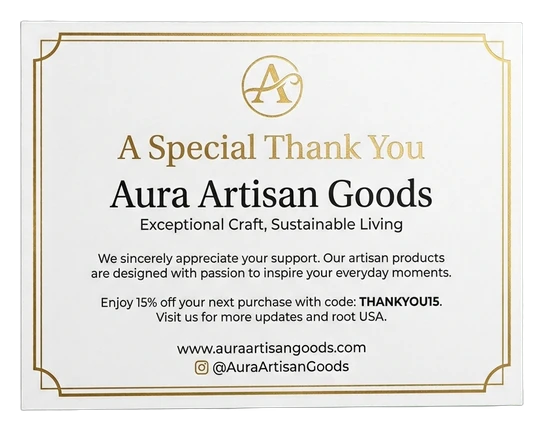
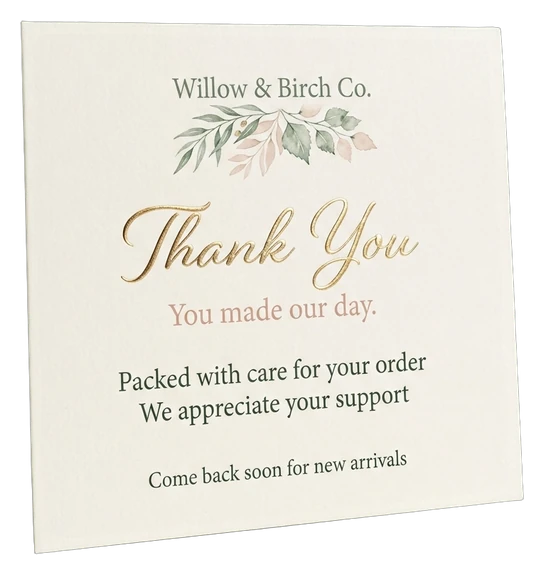
Custom thank you cards give you a dedicated printed space to acknowledge customers inside product packaging, mailers, gift boxes, or shipped orders. Plan the size, cardstock, message, artwork, and print configuration around your package so the card feels intentional rather than becoming another crowded promotional insert.

Select dimensions in cm, mm, inches, ml, or oz and more — whatever fits your product.

Choose the Stock, printing type, and enter your order quantity.

Upload your ready artwork — or just write “Need Design” and we'll handle it.

Fill in your name, contact number, and email for quick communication.

Solve a quick captcha and hit “Submit Quote” — it takes seconds!

Our expert will reach out ASAP with the best market rate from a top packaging provider.

After You Approve the Quote — Here's What Happens Next


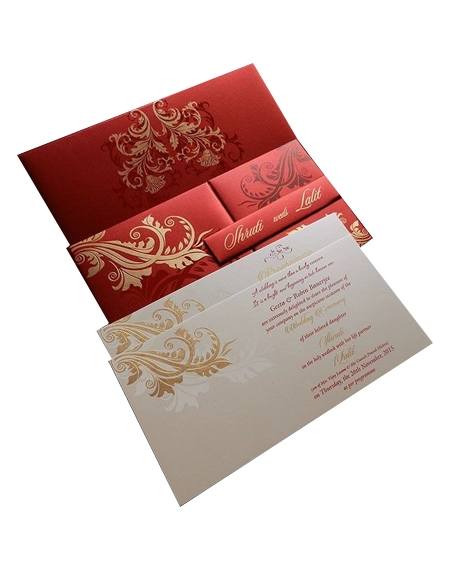
A thank you card has a simple purpose: give the customer a clear acknowledgement after a purchase, gift, event, subscription delivery, or other branded interaction. The production decisions become easier when that purpose is defined before choosing cardstock or decorative finishes. Start with what you genuinely want to say, then build the physical card around the message and the package where it will be used.
Begin with one primary message. For many orders, that can be a short thank-you statement accompanied by your logo or brand name. Other cards may include care information, contact details, a social handle, a QR code, a future-purchase offer, or a brief invitation to learn more about the brand. Additional information should support the thank-you message rather than overwhelm it. If the front becomes crowded with several calls to action, move secondary information to the reverse side when two-sided printing is appropriate for the selected production route. Think about tone as well as content. A luxury gift brand may prefer restrained wording and generous open space. An independent ecommerce business may want something warmer and conversational. A subscription company may need room to identify the box edition or featured collection. The printed format should support the communication style rather than forcing every business into the same template.
Plan the card around the usable space in the actual package. Measure the internal width and length available after the product, tissue, inserts, protective materials, and other components are positioned. A card that fits an empty mailer can still become awkward when the completed order is packed. Placement changes the appropriate size. A card designed to sit directly on top of a product may be sized to create an intentional first view when the package opens. A smaller card can sit beside a product, inside tissue, or in another designated area without covering the presentation. Also consider whether one card size needs to work across several box or mailer formats. A universal size may simplify stock management, while separate sizes can create a more proportionate presentation for very different packages. Provide the dimensions of the smallest and largest packages if you want one format to serve multiple orders. Orientation can also influence the layout. Portrait formats provide a different reading flow from landscape cards, particularly when logos, illustrations, QR codes, or longer messages are involved.
Cardstock affects appearance, stiffness, printed color, and how the card feels when handled. Select it according to the desired presentation and the printing or finishing requirements rather than assuming the heaviest available option is automatically better. White stocks can provide a neutral base for colored artwork. Natural kraft creates a different visual character and can affect the appearance of printed colors. Coated and uncoated surfaces also behave differently in terms of appearance, feel, and writability. If cards will be handwritten after production, make that requirement clear before selecting a coating or finish. A surface selected mainly for visual effect may not behave like an uncoated writing stock. If only part of the card needs handwritten personalization, the artwork and surface specification can be planned around that requirement. Custom Boxes Inc. reports cardstock and kraft among its supported material routes, but the actual stock, weight, surface, and availability for thank you cards should be confirmed for the project.
The card should be understandable without making the recipient search for the main message. Give the thank-you statement, brand name, or other primary element clear visual priority. Secondary information can use smaller type, separate positioning, or the reverse side. Keep enough space around logos and important wording. Dense text can reduce readability, particularly on smaller cards. When the message becomes too long for the chosen dimensions, increasing the card size or editing the copy is usually more practical than shrinking every element. If the card includes a QR code, decide exactly what happens after scanning it. The destination might provide product guidance, a brand story, a loyalty page, account information, or another relevant resource. Keep the code visually clear and test the intended printed size and destination before approving production. A discount or promotional message can also be included when appropriate, but its terms should be accurate. If an offer has restrictions, expiration conditions, or another qualification, leave enough space to communicate those requirements instead of presenting an incomplete promise.
Artwork should be prepared for the actual finished dimensions rather than enlarged or reduced casually at production. Provide production-ready AI, PDF, PSD, or EPS files when available. Custom Boxes Inc. reports artwork support that can include templates or dielines, resizing, bleed, and safe-area assistance for supported projects. Bleed becomes important when background artwork, photographs, patterns, or colors extend to the edge of the finished card. Important logos, wording, QR codes, and other critical elements should remain within the applicable safe area so normal trimming does not place them too close to an edge. If several thank-you messages are needed for different products, campaigns, stores, languages, or customer groups, identify each artwork version before quoting. Changing only a few words still creates a separate print file that may affect setup and production planning. Use the proof to check spelling, contact information, logo position, QR destination, promotional wording, orientation, and overall layout. A digital proof helps approve artwork; it should not be treated as a physical demonstration of cardstock feel, exact final color, foil appearance, embossing depth, or other tactile characteristics.
Custom Boxes Inc. reports digital, offset, and flexographic print routes plus CMYK, PMS or spot colors, white ink on kraft, and selected finishing options across supported packaging projects. The suitable process for thank you cards should be confirmed according to card stock, quantity, artwork, coverage, color requirements, and finish. Simple artwork does not necessarily need an elaborate finish. A well-spaced logo and clear message can already produce an intentional card. Decorative treatments can be considered when they serve a specific design objective, such as emphasizing a logo or coordinating the card with premium packaging. When requesting foil, embossing, debossing, lamination, or another finish, confirm its availability and compatibility with the chosen card construction. Added processes can affect cost, production setup, writable areas, and schedule. If the thank-you card is part of a coordinated packaging system, send references for the box, mailer, tissue, labels, or other printed components. This can help the artwork team understand how the card needs to relate visually to the rest of the presentation without assuming that every component must use identical materials or finishes.
Start with the number of cards you realistically expect to use, then identify how that quantity is divided across artwork versions. One general card may work across a complete product range, while seasonal campaigns, subscriptions, wholesale accounts, gift programs, and multiple brands may require separate versions. Pricing can change with dimensions, cardstock, print process, total quantity, number of versions, print coverage, finishing, setup requirements, packing, and freight. Larger quantities can improve unit pricing on some routes, but the appropriate quantity should still reflect the useful life of the message. Avoid ordering a large quantity of cards carrying a time-sensitive offer, temporary URL, dated campaign, or information likely to change unless the expected usage has been considered. A simpler evergreen thank-you message can remain usable longer. Production and transit should also be treated separately. Confirm the production schedule after artwork, payment, specification, and other required approvals are complete, then account for shipping time to the delivery destination.
Send Custom Boxes Inc. your desired card dimensions, quantity, number of artwork versions, cardstock preference, printing requirements, finishing requests, package dimensions, artwork files, and delivery destination. If you are unsure about the card format, explain how and where it will be used so the remaining specification can be reviewed. Complete the form, email Quotes@Customboxesinc.Com, or call +1 833-565-0363.


Answers to Help You Order with Confidence
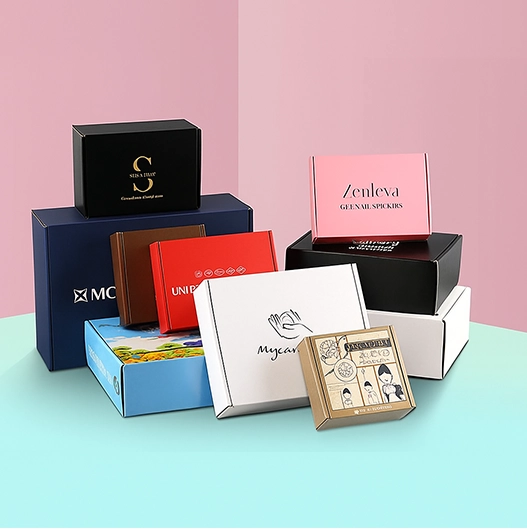
You can plan the card around a thank-you message, logo, brand story, contact information, social details, QR code, care guidance, or a relevant promotional message. Keep the main purpose easy to recognize and move secondary information to another area or side when necessary. Any promotional terms or required product information should remain complete and accurate.
Choose the size according to your message and the usable space inside the package where the card will be placed. Measure the packed configuration rather than only the empty box or mailer. If one card needs to work across several packages, provide the relevant dimensions so the proposed format can be evaluated.
Two-sided printing may be suitable depending on the selected card stock, artwork, quantity, and production route. It can separate a primary thank-you message from QR information, care instructions, contact details, or another secondary message. Confirm the required configuration when requesting your quote.
Yes, the artwork can be planned with an area intended for later personalization, but the cardstock and surface treatment need to suit writing. Tell the team what type of writing or personalization is expected before the material and finish are finalized. Do not assume every coated or laminated surface will perform the same way.
Provide the finished card size or package dimensions, quantity, number of artwork versions, cardstock preference, printing requirements, requested finishes, artwork files, and delivery destination. Also explain whether cards will be handwritten or include QR codes, offers, or other special content. Unknown specifications can be reviewed as part of project planning.
Custom Boxes Inc is a leading manufacturer and supplier of custom packaging boxes tailored for every product and industry. From startups to global brands, we empower businesses across the USA with cost-effective, high-quality, fully personalized packaging solutions — crafted with precision, delivered with speed. Whether you need eco-friendly cardboard boxes, rigid luxury boxes, or branded retail-ready display packaging — we've got you covered with endless customization options, low MOQs, and lightning-fast turnarounds.