

Select dimensions in cm, mm, inches, ml, or oz and more — whatever fits your product.



Custom printed rigid boxes pair a substantial presentation structure with artwork planned for the actual wrap, opening style, and product arrangement. Custom Boxes Inc. helps buyers connect packed dimensions, rigid-box construction, printed surfaces, inserts, finishes, artwork versions, and order planning. Share your product, preferred opening experience, quantity, artwork status, and delivery needs to start a project-specific rigid packaging quote.

Select dimensions in cm, mm, inches, ml, or oz and more — whatever fits your product.

Choose the Stock, printing type, and enter your order quantity.

Upload your ready artwork — or just write “Need Design” and we'll handle it.

Fill in your name, contact number, and email for quick communication.

Solve a quick captcha and hit “Submit Quote” — it takes seconds!

Our expert will reach out ASAP with the best market rate from a top packaging provider.

After You Approve the Quote — Here's What Happens Next


Custom printed rigid boxes are presentation-led packages, so the structure and the printed surface should be planned together. Start with the product in its packed condition, the way staff will place it inside, and what the customer should see when the box opens. Then define the exterior proportions, opening style, interior arrangement, printed wrap, and finish hierarchy. A rigid format should serve a clear presentation job rather than being chosen only because it looks substantial.
Measure the maximum product length, width, and depth, plus packed weight when it affects the structure or handling plan. Include existing primary containers, caps, accessories, tissue, and supported paper-based inserts that remain inside. Custom Boxes Inc. supplies empty paper-based packaging, not the packaged contents or plastic, glass, jar, or metal primary containers. Foam inserts and round or tube boxes are outside the current approved scope.
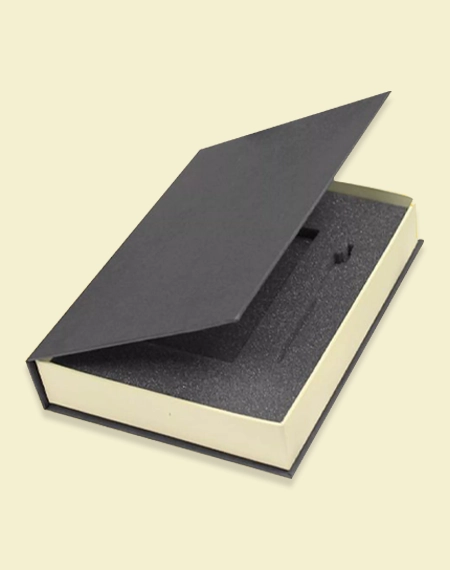
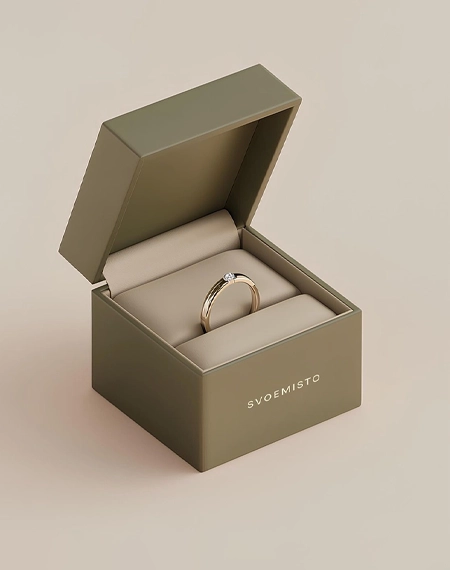
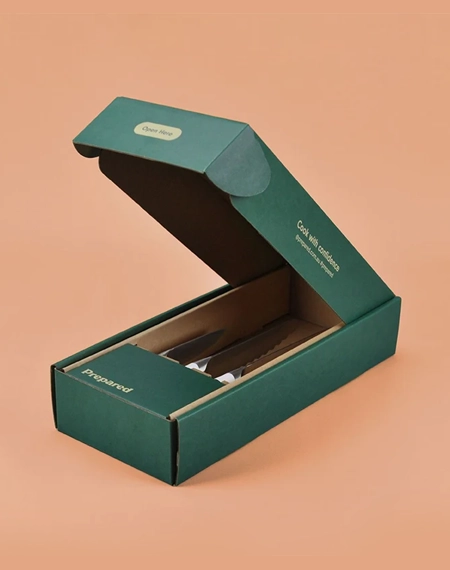
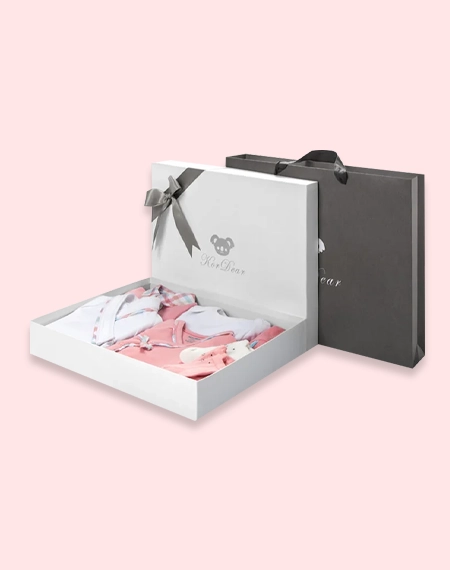
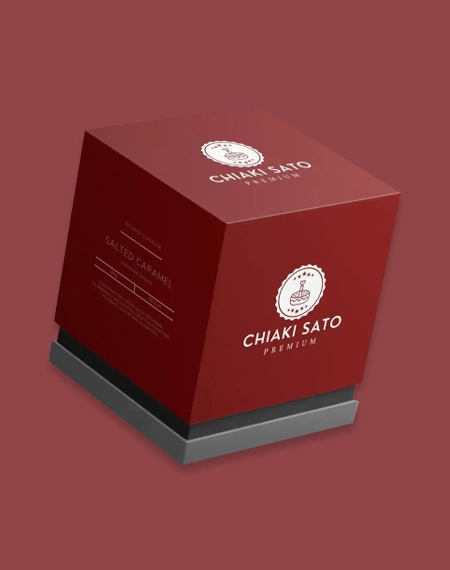
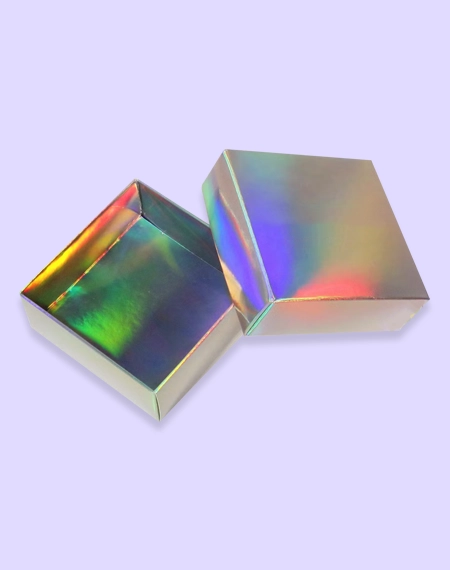
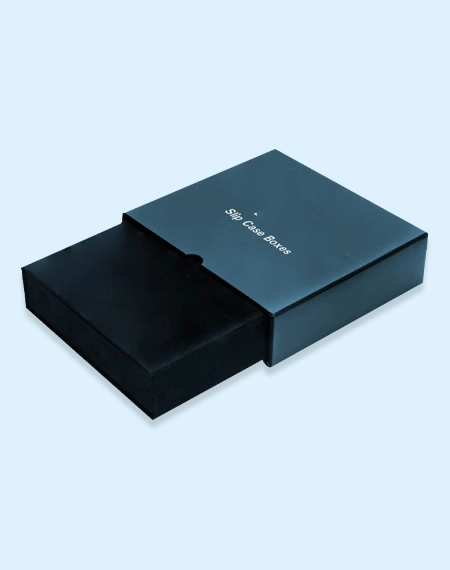
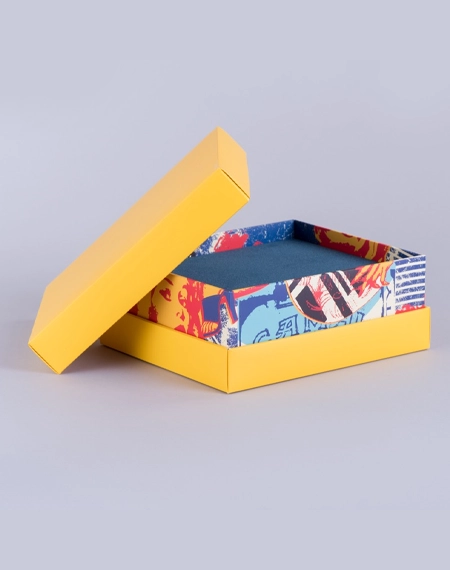
Rigid packaging can use different opening mechanisms, and each one changes the printed surfaces and the way the product is revealed. A two-piece lid-and-base format separates the cover from the base. A hinged presentation box keeps the cover attached. A drawer or slide format moves an inner tray through an outer sleeve. These terms describe different constructions, so the agreed dieline or sample should govern the final box rather than a style name alone.
Check lid depth, lift space, hinge behavior, tray-to-sleeve fit, grip, stops if present, and the product's removal path before artwork is locked. Many rigid formats occupy more storage volume than folding cartons, especially when supplied assembled. Do not assume every rigid box ships flat or collapses, and do not treat a presentation box as parcel-ready shipping packaging without evaluating the complete distribution pack.
Many rigid constructions use a stiff board wrapped with a printed or decorative paper surface. That makes wrap alignment, edge turns, corners, seams, and panel transitions part of the artwork decision. A logo centered on a flat digital mockup may sit too close to an edge once the paper wraps around the finished structure. Review the actual production layout and visible faces before approving logo size, pattern position, or interior copy.
Supply vector logos when available and identify approved colors, fonts, images, product copy, and version rules. Printed wraps can carry exterior branding, patterns, product names, or campaign artwork, while supported interior surfaces may carry a message or secondary branding. Confirm which surfaces are actually printable for the selected construction instead of assuming every inside and outside panel can use the same process.
CMYK artwork, selected spot colors, white ink, foil, embossing, debossing, matte or gloss treatments, and other effects may be considered where the chosen wrap, board, structure, and production route support them. A brand-color reference is a production target, not proof that every paper and finish will reproduce it identically. Paper shade, coating, ink, lighting, and neighboring colors can all change the final appearance.
Finish placement also needs structural clearance. Foil or embossing near an edge, hinge, lid turn, closure area, or wrap seam may require adjustment. Fine type and barcodes need enough contrast and usable surface area after finishing. Use specialty treatments to establish a clear hierarchy rather than applying every option to every face of the box.
The interior should make the product easy to place, present, and remove. Supported paperboard inserts, corrugated dividers, trays, or fitted paper-based components can organize one item or a set where the configuration allows. Record every product and accessory that must fit inside, including the order in which the customer should encounter them. An insert changes the usable depth and may affect the outer box dimensions.
Rigid packaging can frame jewelry, cosmetics, apparel, electronics accessories, gifts, and other products, but the application does not remove the need for fit checks. A heavy item, protruding component, or delicate surface may need a different arrangement from a lightweight gift set. Do not infer cushioning, antistatic protection, or universal load capacity from a rigid board or insert description alone.
A digital proof is useful for checking wording, artwork version, orientation, wrap panels, color references, and designated finish areas. It does not prove physical fit, lid effort, sliding behavior, exact printed color, material feel, or parcel performance. An unprinted structural sample can help with dimensions and opening mechanics, while a printed sample may help when the represented wrap, print, or finish needs hands-on review.
Physical sample availability, cost, and schedule should be confirmed for the actual project. For rigid packaging, a sample can be especially useful when the decision depends on tray fit, lid clearance, hinge behavior, wrap alignment, or the relationship between an insert and the product. Choose the approval step according to the uncertainty that matters most.
A rigid presentation box can be part of the customer experience without being the package that travels unprotected through a parcel network. If the rigid box will ship inside an outer corrugated container, specify both layers and review the space between them. If the rigid box itself is expected to travel through distribution, assess closure, movement, labels, weight, stacking, and handling conditions rather than relying on appearance or board thickness.
The same discipline applies to environmental and durability claims. A substantial board does not prove a specific compression rating, waterproof performance, recycled content, or unlimited reuse. Use configuration-specific records and appropriate testing when measurable performance is part of the purchase decision.
Printed rigid boxes often support product collections with shared branding and changing product names, colors, sizes, or campaign messages. Separate the fixed structural file from each approved artwork version. Record the dieline, wrap specification, finish, insert arrangement, quantity, and revision for every combination so purchasing and production teams can distinguish a simple reorder from a change that needs another approval.
Company records report selected rigid orders starting at 25 boxes, but that figure depends on the structure, artwork versions, finishes, and project conditions. A multi-SKU order may not behave like one single-design run. Request quantities by version and realistic reorder scenarios so pricing, storage, and production planning reflect the actual program.
Send Custom Boxes Inc. the packed product dimensions, weight where relevant, preferred rigid structure if known, insert needs, quantity by size and artwork version, logo or artwork status, finish ideas, destination, and target arrival date. If the concept is still developing, explain the intended opening sequence and what the customer should see first so the team can help narrow the supported direction.
Email Quotes@Customboxesinc.Com, call +1 833-565-0363, or complete the website quote form to request custom printed rigid boxes. Free design assistance can help organize supplied branding around the approved structure, while minimums, samples, printing, finishes, production timing, manufacturing origin, and delivery terms are confirmed for the actual configuration.
Trusted By Premium Brands


Answers to Help You Order with Confidence
Rigid packaging uses a more substantial board-based construction and is typically planned as a presentation format rather than a folding carton that erects from a lighter paperboard blank. The exact components, wrap, assembly, and supply state depend on the selected structure. Do not assume every rigid box ships flat or collapses.
Exterior and interior printing can be considered where the selected rigid construction, wrap, and production route support it. Confirm the printable surfaces before artwork is finalized because wrap seams, turns, hinges, trays, closures, and inserts can change usable areas. Additional print coverage can also affect the quote and approval plan.
Supported paperboard, corrugated, or other approved paper-based insert arrangements can be considered for relevant rigid-box projects. The insert should be designed around the actual product, lifting space, packing order, and removal sequence. Foam inserts are outside the current approved Custom Boxes Inc. scope.
Company records report selected rigid configurations starting at 25 boxes. The applicable minimum can change with the structure, size, artwork versions, finish, insert arrangement, and production setup. Share the full quantity split for an accurate project-specific quote.
Start with the approved structure and production layout, then place supplied branding around the visible wrap surfaces, edges, seams, and interior areas that are actually printable. Vector logos and approved color references are useful when available. Free design assistance can help organize the supported dieline and artwork before proof approval.
Custom Boxes Inc is a leading manufacturer and supplier of custom packaging boxes tailored for every product and industry. From startups to global brands, we empower businesses across the USA with cost-effective, high-quality, fully personalized packaging solutions — crafted with precision, delivered with speed. Whether you need eco-friendly cardboard boxes, rigid luxury boxes, or branded retail-ready display packaging — we've got you covered with endless customization options, low MOQs, and lightning-fast turnarounds.